ReLocavore: Redefining "local"

Back to Wisconsin, my cheesehead friends


4 Comments

This week in veg: the vegetables have arrived!

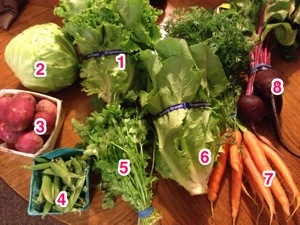
As you may have noticed, this week in veg has been on a hiatus for the past two weeks. This is because Sam and I were in Wisconsin and we got to give away our CSA to some fortunate friends of ours. We are back this week, and while we were gone the vegetables seem to have arrived in Vermont! Looking back over previous weeks, we had lots of greens and one or two small and large groups. But this week we finally see real vegetables: peas, cabbage, beets the size of Apple. All those wonderful things that show up this time of the year and require a little more sun and a little more water to get the right size. I’m hungry!

20130705-181410.jpg
1. Lettuce
2. Cabbage
3. New potatoes
4 shelling peas
5 cilantro
6 another head of lettuce
7 carrots
8 beets


1 Comment

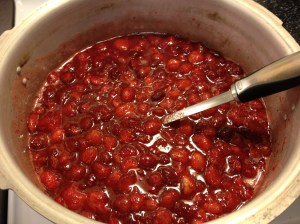
Strawberry Jam

photo

The back-of-the-napkin calculation…

Yielded 25 jars of jam for $4.66 per jar.

Next year, when I don’t have to buy jars, but only have to buy lids ($0.16/lid), each jar will cost me $4.14.

And yes, I didn’t factor in the cost of the equipment that I used – both the general equipment (bowls, spoons) and the canning-specific equipment (canner, jar tongs, lid lifter magnet).

IMG_3457


4 Comments

This Week in Veg: organic, locally-grown iceberg lettuce

20130614-185050.jpg1. Napa cabbage 2. Red leaf lettuce 3. Swiss chard 4. Iceberg lettuce 5. Green garlic 6. Escarole

I have never before seen locally grown, organic iceberg lettuce. It looks a little bit less freakish than the stuff you find wrapped in plastic at the grocery store, but only a little bit less freakish. I’m curious what these heads of lettuce would retail for at the farmers market or at the co-op. Just because it’s funny, we may have a composed salad where we serve wedges of iceberg lettuce. Has your CSA ever delivered iceberg lettuce?

The other treats this week was green garlic. This is a young garlic plants that have not had time to form a head of garlic and mature. The white bulbs and some of the green stems are edible, and the flavor tastes like garlic but not as strong. Sam is using some of the cream garlic in tonight’s dinner; pasta with garlic and olive oil and cheese.


Leave a comment

Locavore Survival Guide: What is a locavore?

So I need to address the obvious – What is a locavore? The most boilerplate comes from the very first post of this blog – The dictionary definition, “A person whose diet consists only or principally of locally grown or produced food.” There’s two problems I have with this definition. First, it frames locavore as a “diet” and second, the definition leaves “local” to be defined elsewhere. Please excuse me as I pick at nits.

I don’t like diets – in the modern use of the word as a set of guidelines on choosing food, not in the Anthropological meaning of the word as anything that people eat. Diets come as arbitrary sets of rules or guidelines that ossify eating practices and attempt to define the world into “good” and “bad” foods. Lard? Bad. Broccoli? Good. Locally-raised pig lard? Bad (unless you’re a locavore, then it’s good). Conventionally farmed broccoli from Argentina available in New Hampshire in February? Good (unless you’re a locavore, then it’s bad…) I really do NOT want anyone to think there is some list of goods and bads making up the Locavore diet and that you may only eat things on the good list and nothing off the bad list. Diet also emphasizes choosing foods and avoiding foods – a universe of possibility that neglects what you do with the foods you choose or what happens to the foods you avoid. I want locavore to mean more than just choosing foods that are good and avoiding foods that are bad because locavore is more than just the food – it’s about preserving food, cooking food and enjoying food too…

Second, the dictionary leaves out what “local” means. The dictionary defines “local” as “belonging or relating to a particular area or neighborhood, typically exclusively so.” Local as geography. So each locavore is a pin on a map with a circle around it. I don’t much like that either. We can use other definitions of “local” to broaden our understanding of food. I think of food using a network definition. Imagine a network of food producers, packagers, distributors and consumers. Each person or organization is a node and is linked by the transactions between nodes. We all eat within this type of network-I buy a can of tomatoes sold at the coop, shipped by a grocery wholesaler, packages by a plant, picked by a person, grown by a farmer. Alternatively I go to my pantry and get a jar of home-canned tomatoes that I bought at a farm stand that were picked by the farmer. Local, to me, means both geography AND relationship networks. How can we act to minimize both distance and connections?

So, I’m being pedantic, but I want to explore these ideas more fully in this blog… This is why I started in the first place. To gain a better understanding of how and why I eat locally.

So back to my original question: What is a locavore? The dictionary says, “A person whose diet consists only or principally of locally grown or produced food.” Let’s modify this…

A locavore is person who acquires, preserves, cooks and eats food in order to minimize the distance between the food production and consumption.

What do you think?


Leave a comment

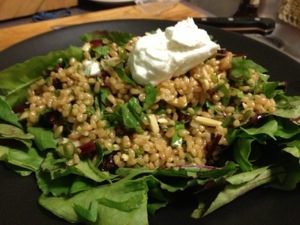
Wheat berry salad with beet greens, almonds, dried cherries and goat cheese

This is a modified recipe from Mark Bittman’s How to Cook Everything called wheat berries with walnuts. I needed to get rid of a whole bunch of beet greens before they went swishy, so I added them. I think given a nice color.

20130610-172911.jpg


2 Comments

Locavore Survival Guide: Storing Greens in the Fridge

This is the first post of a new series – the Locavore Survival Guide. I hope to provide some advice for novice locavores who are trying out the Farmer’s market, maybe purchasing a CSA (Community sponsored agriculture), or just choosing from the “locally grown” section of the supermarket. After 10 years of eating locally, I hope to have learned a thing or two, and I can share some of my experiences making this same transition. Look for Locavore Survival Guide posts on Tuesday mornings…

Storing Greens in the Fridge

In the early Spring,  my winter stores are low, my kuhlschrank is empty and turned off, and I have more empty canning jars than full. Spring vegetables don’t take well to preserving – they’re leafy and tender. So, in the Spring we scramble to eat all of the veg before it goes mushy.

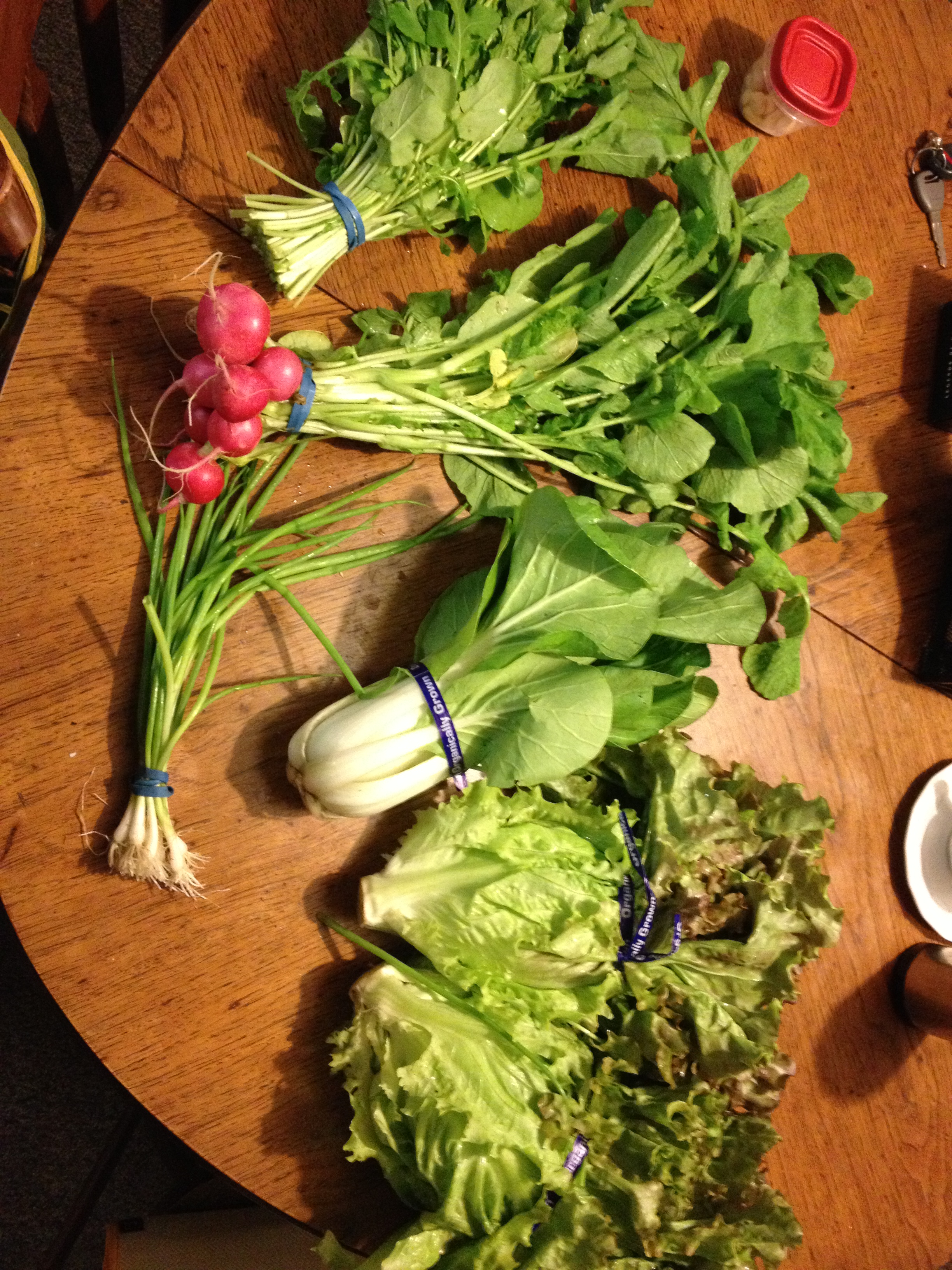
Some examples of Spring vegetables that we ate in Wisconsin and hope to eat in New Hampshire include: Spinach, radishes, lettuce, asparagus, cooking greens (frisee, endive), Chinese vegetables (bok choi, tatsoi), tiny beets, and sweet salad turnips. Most of these are leaves, a few stems and swollen roots, and no fruits yet…

Most of these leafy greens will wilt and dry out if just put in the refrigerator. Compared to store-bought greens, locally-bought greens will stay crisp and moist much longer in the fridge. The local veg that I get in our CSA is often only 1 or 2 days out of the ground, while some veg in the grocery store may have been picked weeks before. For locally picked veg, by my accounts, you have about 2 days in the fridge with unprotected greens before they’re wilted and inedible. However, if you put a little effort up front, these vegetables will stay very crisp and moist in the fridge, without getting soggy and mildewy. You can plan to pick up your CSA on Friday and still have crisp veg to cook with on the following Thursday. It’s all about moisture control.

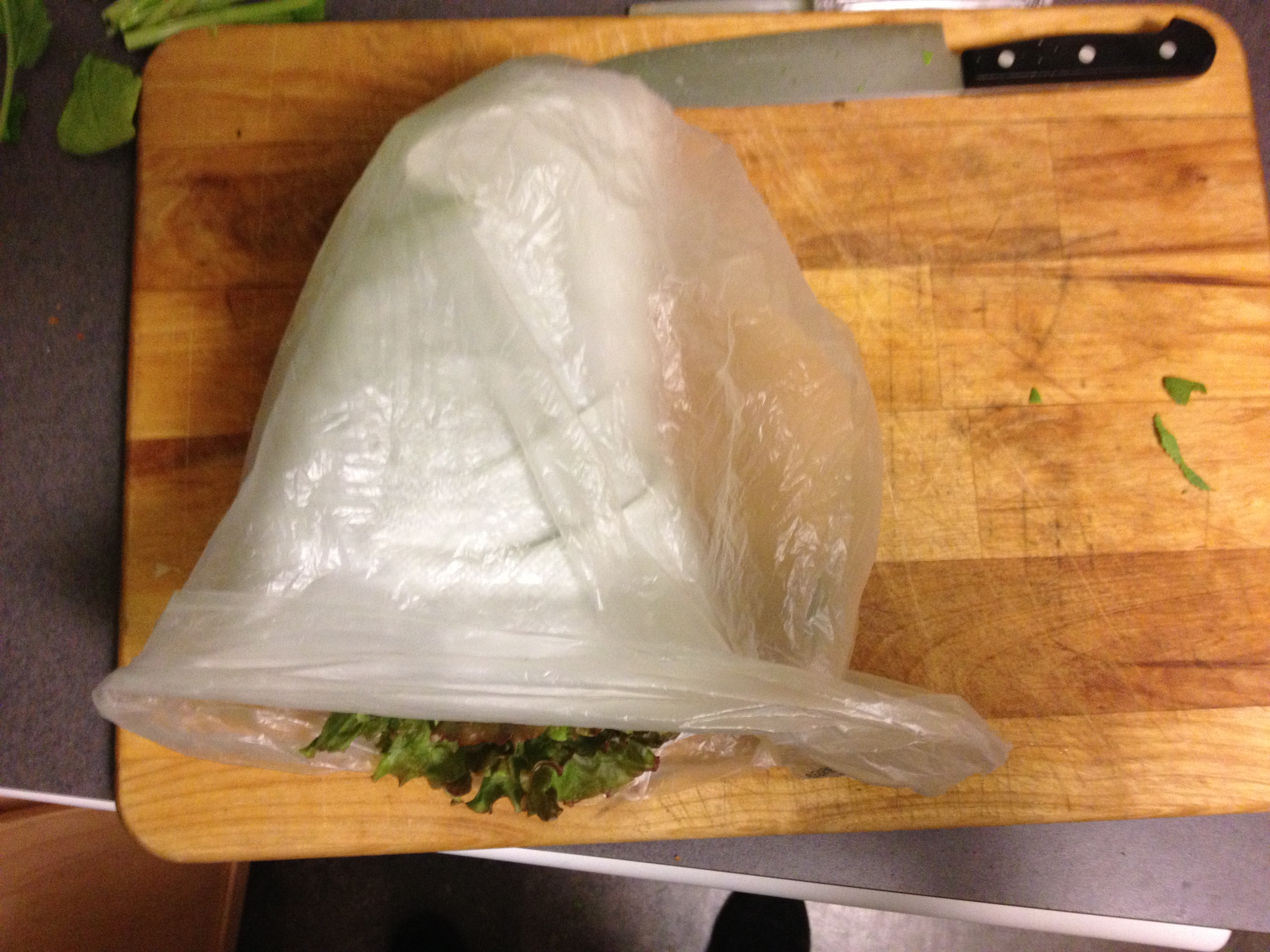
First, all leafy greens need to be in a bag to keep in the moisture, but if there’s too much moisture, then the greens with get soggy. To absorb extra moisture, I wrap greens in paper towels, then put them in the bag, and twist the bag shut. This gives an environment where the moisture will stay constant, and any extra will be absorbed by the towels. Store the bagged veg in the bottom of the fridge, in a “crisper” drawer, if you’ve got room. However, bagged like this, the greens should stay crispy for 5 days, longer if they’re really recently picked.
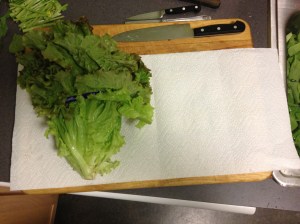
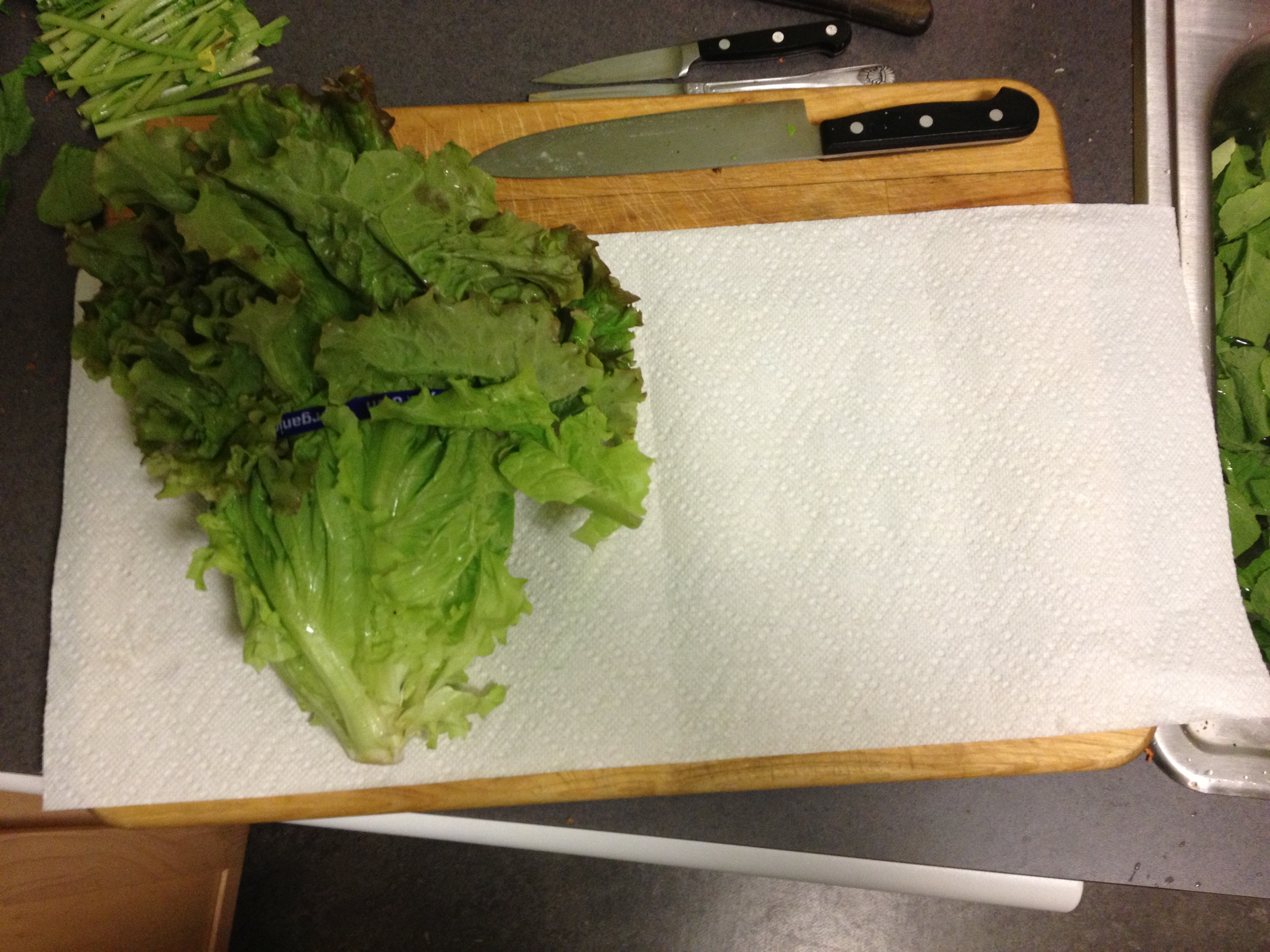
Lay the veg out on a clean, dry paper towel. If the greens are visibly dirty, spray off the dirt, but don't leave too much water clinging to the veg.

Lay the veg out on a clean, dry paper towel. If the greens are visibly dirty, rinse away the dirt, but don’t leave too much water clinging to the veg.
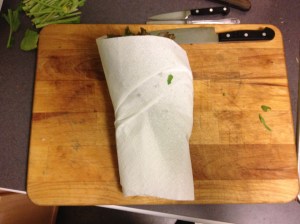
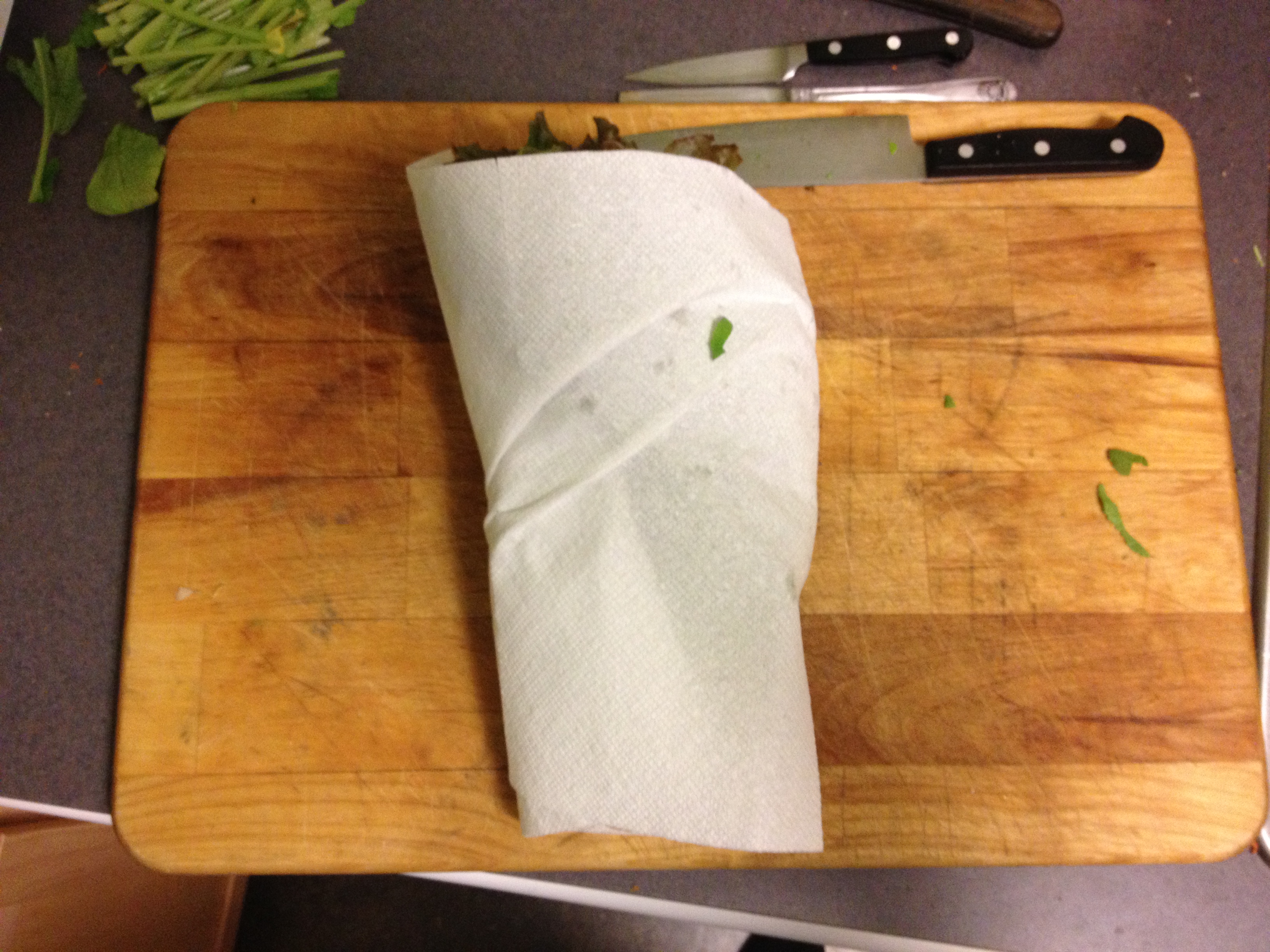
Just like a tiny infant, bring all of the leaves together and tightly wrap in the paper towel.
Bring all of the leaves together and tightly wrap in the paper towel.

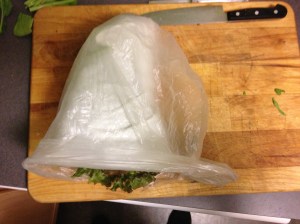
Put the paper towel-wrapped veg into a plastic bag. Twist the top closed.

Put the paper towel-wrapped veg into a plastic bag. Twist the top closed.


4 Comments

Norwich Farmers’ Market

Today we made it over to the Norwich, VT Farmers’ Market located on Rt 5 and runs Saturday Mornings from 9a-1p. We spent an hour and about $60. We came home with:

  • One braid of Shallots $13 (My indulgence)
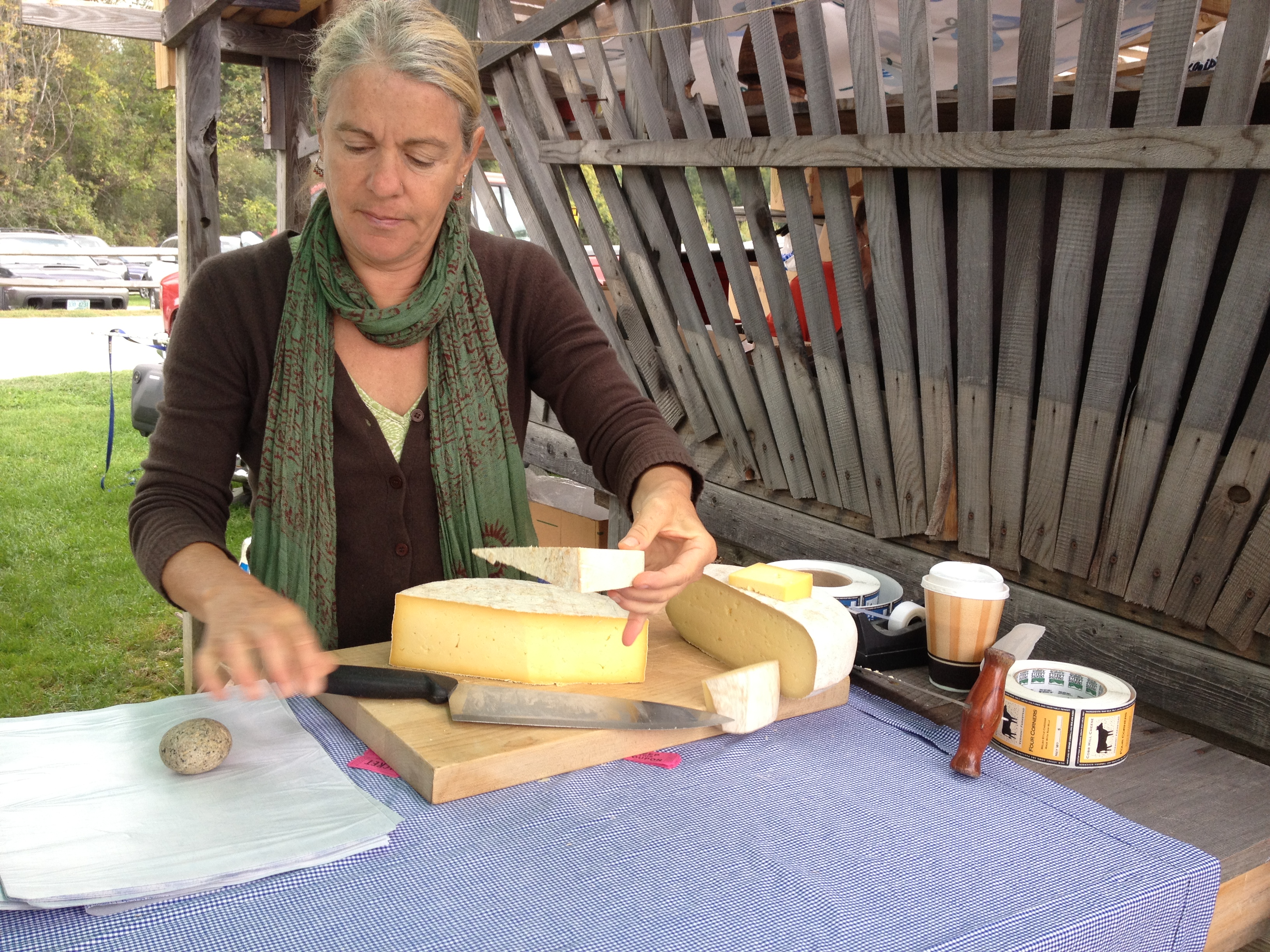
  • 1/4 lb Welsh-style cheddar cow’s milk cheese. Cobb Hill. $4.50 (Sam’s indulgence)
  • Ingredients to make a pot of potatoes and beans for dinner tonight: green beans, potatoes, onion, garlic, carrots and corn. I’d love to have a ham hock or bit of ham to put in the pot. We’ll see what the COOP can do.
  • Ingredients to make beans and greens in the rice cooker for dinner tomorrow night. I’ll post details on that later.Read more here…
  • Ingredients to make an italian dinner one evening including tomatoes, garlic, bell peppers.
  • Some fruit: Apples and a cantelope.
  • Edamame
  • cucumber, celeriac and hakurei salad turnips

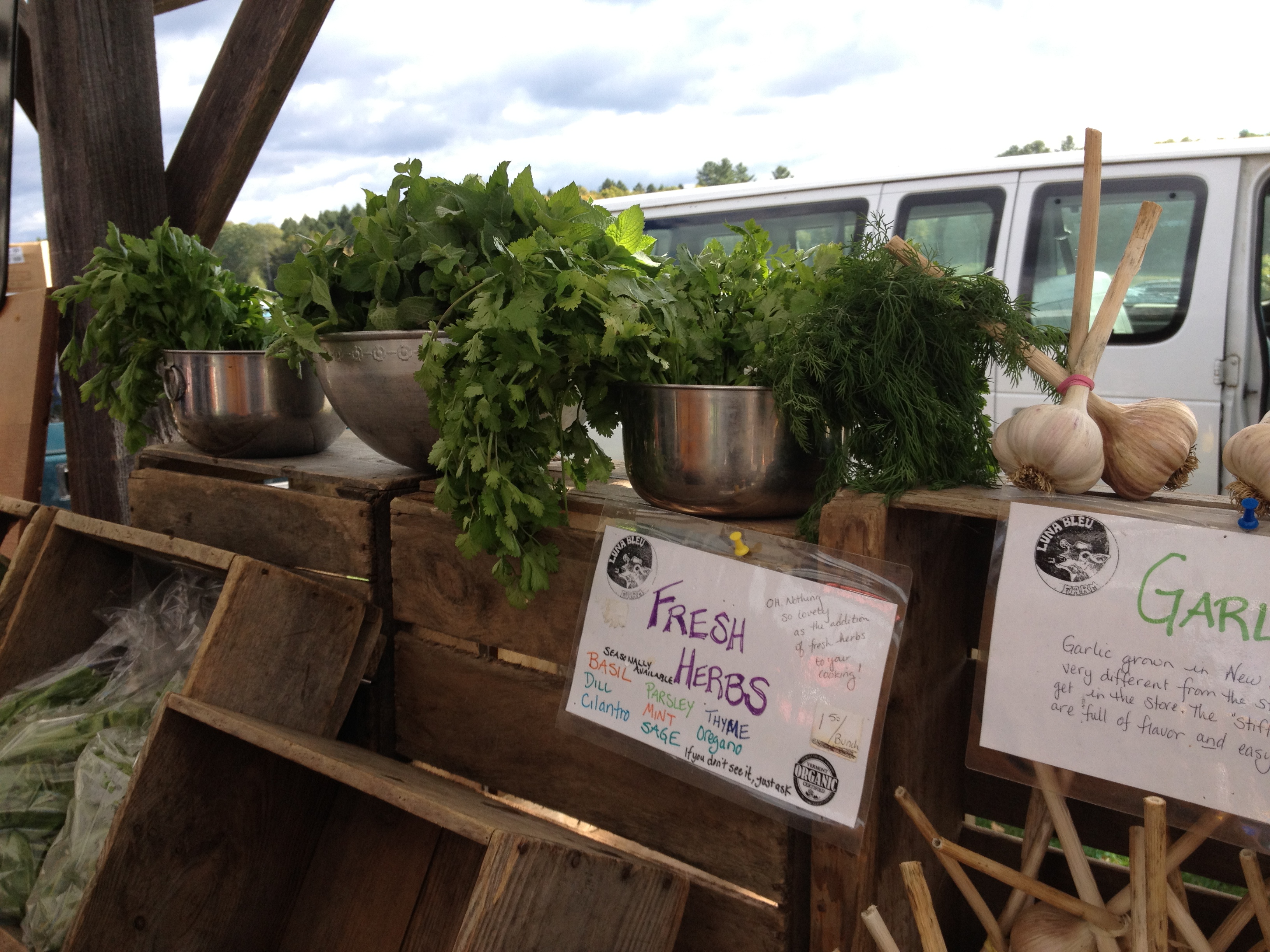
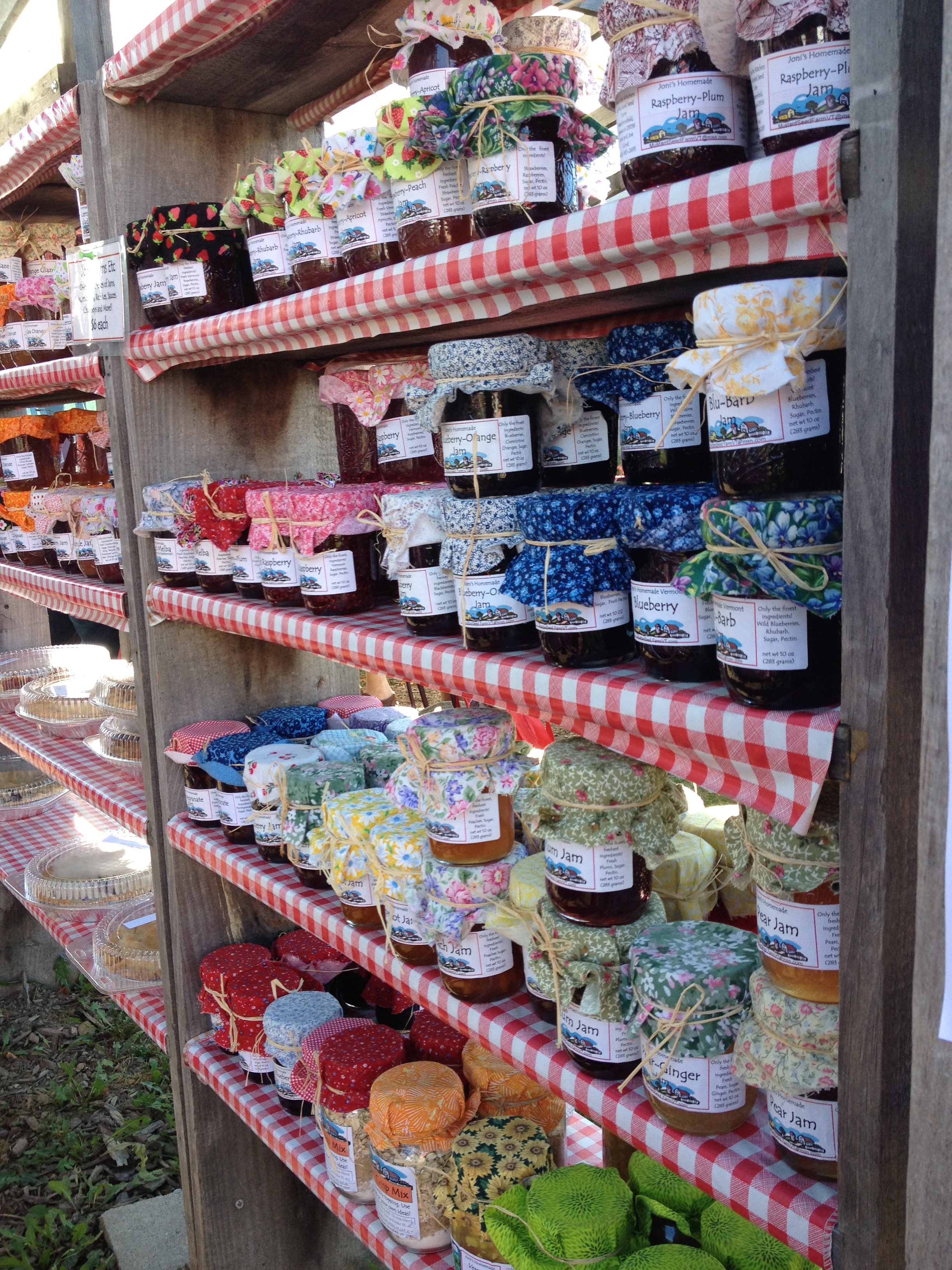
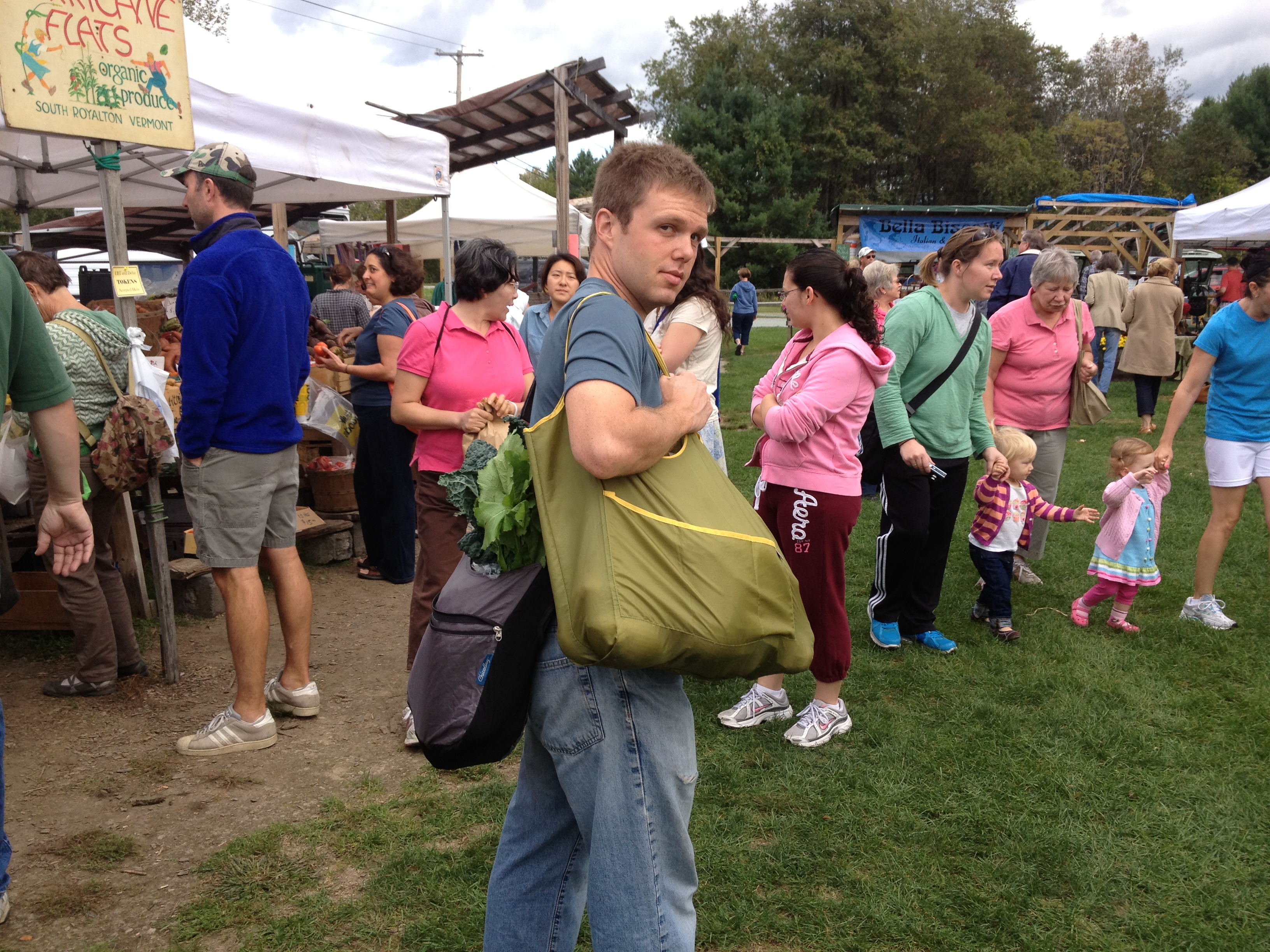
The Norwich farmers’ market is more diverse than many of the small Madison markets. There were plenty of vegetable farms, but few fruit farms. I saw lots of bakeries and jammeries (I just made that word up), plenty of good pastries. There were more herbs for sale here than at any other farmers’ market I have attended, and, in fact, there was an entire herbalist booth. It seems some of the booths are semi-permanent wooden shelters, and other booths are temporary pop-up tents. The market center is a wooden gazebo and today, since the market was celebrating its 35th year, there was a band and a raffle. 35 years is pretty impressive.

Cheese from Cobb Hill Farm, cut to order and wrapped by hand.

I’ll make better measures later, but it seems the average prices are on par with Madison’s markets. Some things, notably sweet corn, were priced a LOT higher. Sweet corn was $0.60/year or $7 for a baker’s dozen. I almost choked. Typically, I buy sweet corn at $2.50/dozen or not at all… We got two good tips on CSA availability. Suzanne at Luna Bleu Farm has chicken/egg shares and Your Farm still has fall and winter CSA shares available.

Note the sturdy wooden structures in the background.