ReLocavore: Redefining "local"

Back to Wisconsin, my cheesehead friends


5 Comments

This week in veg: Fruit!

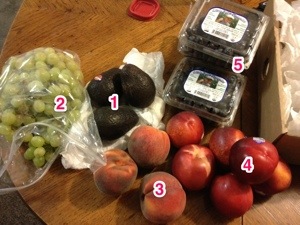
20130711-151648.jpg This week, we became began receiving our fruit share. In the box this week were:

1. Hass avocados from Carpetina, CA
2. Grapes. Coachella valley, CA
3. peaches (no origin mentioned in the newsletter)
4. White nectarines from Oregon
5. Blueberries from New Jersey

So you’ll scan the list above and ask yourself, “what’s so local about that? Your fruit is coming from all over the country!”

Here’s the way I look at it. We live way up north, and there’s only so many things that are actually able to grow in our climate. The fruit that grows local includes: rhubarb, strawberries, blueberries, apples, and cranberries. How fruit share works is they collaborate with farms across the country, to grow fruit in the way that is most sustainable for that area. When fruit in one geographic area is ripe, it’s shipped to a central location boxed up and then distributed out to fruit share members. Fruit share makes extra effort to offset the carbon cost of growing and harvesting the fruit, and transporting fruit across the country.

I could spend another thousand words trying to explain the cognitive dissonance of describing our fruit box from all over the US, but… Ultimately it boils down to this: our CSA in Wisconsin used to offer us fruit share as part of our delivery, we signed on, and we got really spoiled by having good fruit all summer long. We get extra fruit and put it in the freezer for the winter time. And it’s become a main component of our diet. So we have it again here in New Hampshire.

Fruit hypocrite? You tell me in the comments.
ReLocavore at the Dane County Farmer’s Market

Leave a comment

For your viewing pleasure, I shot and edited some video of the Dane County Farmer’s Market (DCFM) while we were at our vacation in Madison. I wanted to give everybody a sense of what an insanely huge Farmer’s Market goes on every Saturday in Madison.

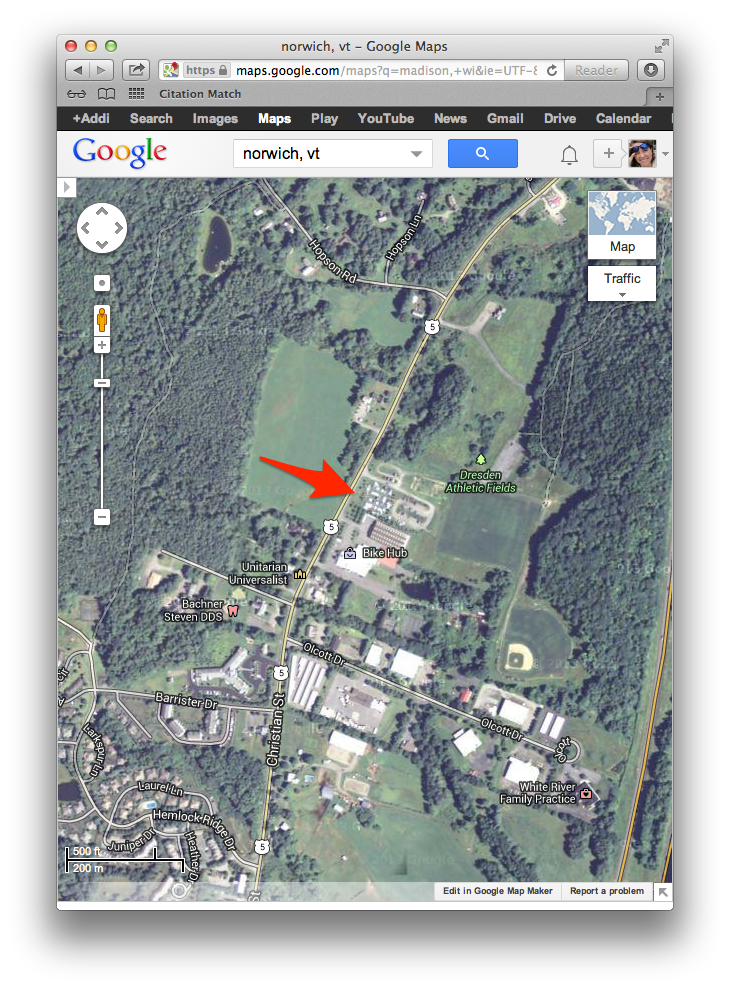
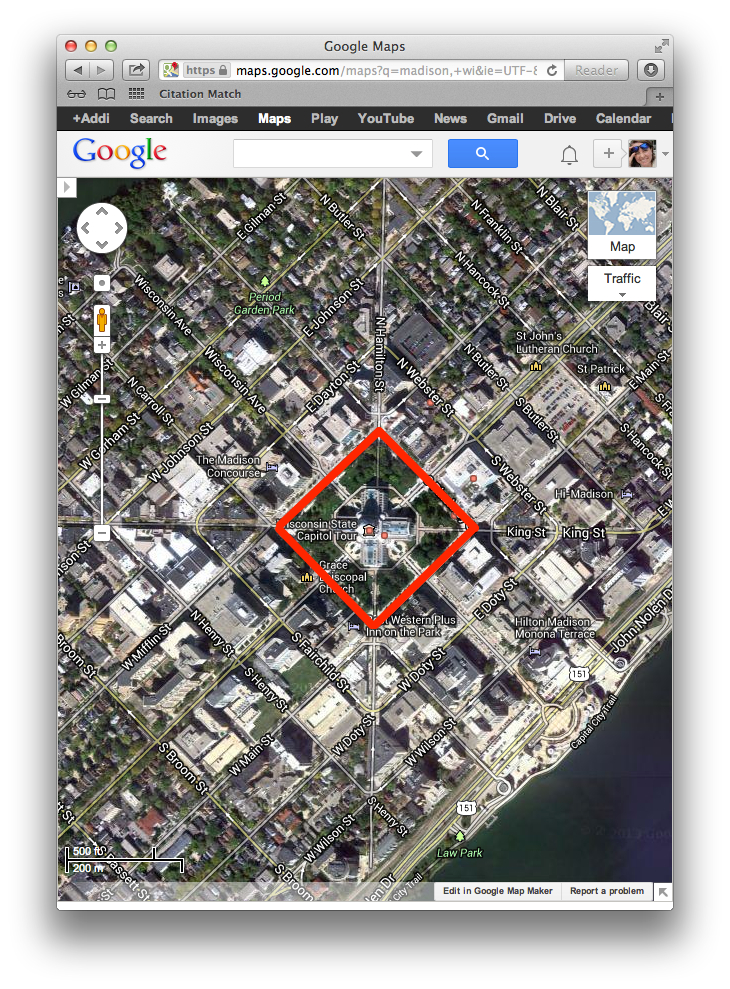
For size comparison, I’ve taken two Google Map images of the permanent site of the Norwich Farmer’s Market, our regular market here in Vermont, and an image of the DCFM, highlighting in red the streets that are lined with vendors.

Dane County Farmer's Market takes up 8 city blocks around the Capitol Square in Madison.

Dane County Farmer’s Market takes up 8 city blocks around the Capitol Square in Madison.

The Norwich Farmer's Market occupies a permanent space.

The Norwich Farmer’s Market occupies a permanent space.


4 Comments

This week in veg: the vegetables have arrived!

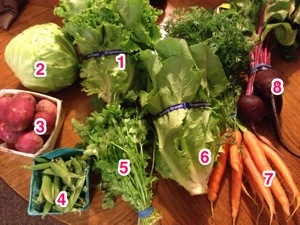
As you may have noticed, this week in veg has been on a hiatus for the past two weeks. This is because Sam and I were in Wisconsin and we got to give away our CSA to some fortunate friends of ours. We are back this week, and while we were gone the vegetables seem to have arrived in Vermont! Looking back over previous weeks, we had lots of greens and one or two small and large groups. But this week we finally see real vegetables: peas, cabbage, beets the size of Apple. All those wonderful things that show up this time of the year and require a little more sun and a little more water to get the right size. I’m hungry!

20130705-181410.jpg
1. Lettuce
2. Cabbage
3. New potatoes
4 shelling peas
5 cilantro
6 another head of lettuce
7 carrots
8 beets


1 Comment

Strawberry Jam

photo

The back-of-the-napkin calculation…

Yielded 25 jars of jam for $4.66 per jar.

Next year, when I don’t have to buy jars, but only have to buy lids ($0.16/lid), each jar will cost me $4.14.

And yes, I didn’t factor in the cost of the equipment that I used – both the general equipment (bowls, spoons) and the canning-specific equipment (canner, jar tongs, lid lifter magnet).

IMG_3457


4 Comments

Back from the Heartland

This is as local as it gets, folks... Mom's garden peas.

This is as local as it gets, folks… Mom’s garden peas.

We’re back from Wisconsin. You can look forward to a LOT of wonderful posts about local eating in Wisconsin. I also took over an hour of video at the Saturday Dane County Farmer’s Market on cheese curds, hot spicy cheesy bread, and the market itself. I hope to post videos over the next two weeks.

I did come across this piece from my RSS feeds and though y’all might like to read about the State of the CSA from Modern Farmer.

“Everyone who is helping develop marketing channels that keep local farms in business deserves a place at the table. It’s just important to recognize that these are businesses, not community-run projects or social ventures,” said Just Food’s Berger. “CSA provides a greater social benefit for the broader community.”


4 Comments

This Week in Veg: organic, locally-grown iceberg lettuce

20130614-185050.jpg1. Napa cabbage 2. Red leaf lettuce 3. Swiss chard 4. Iceberg lettuce 5. Green garlic 6. Escarole

I have never before seen locally grown, organic iceberg lettuce. It looks a little bit less freakish than the stuff you find wrapped in plastic at the grocery store, but only a little bit less freakish. I’m curious what these heads of lettuce would retail for at the farmers market or at the co-op. Just because it’s funny, we may have a composed salad where we serve wedges of iceberg lettuce. Has your CSA ever delivered iceberg lettuce?

The other treats this week was green garlic. This is a young garlic plants that have not had time to form a head of garlic and mature. The white bulbs and some of the green stems are edible, and the flavor tastes like garlic but not as strong. Sam is using some of the cream garlic in tonight’s dinner; pasta with garlic and olive oil and cheese.


Leave a comment

Locavore Survival Guide: What is a locavore?

So I need to address the obvious – What is a locavore? The most boilerplate comes from the very first post of this blog – The dictionary definition, “A person whose diet consists only or principally of locally grown or produced food.” There’s two problems I have with this definition. First, it frames locavore as a “diet” and second, the definition leaves “local” to be defined elsewhere. Please excuse me as I pick at nits.

I don’t like diets – in the modern use of the word as a set of guidelines on choosing food, not in the Anthropological meaning of the word as anything that people eat. Diets come as arbitrary sets of rules or guidelines that ossify eating practices and attempt to define the world into “good” and “bad” foods. Lard? Bad. Broccoli? Good. Locally-raised pig lard? Bad (unless you’re a locavore, then it’s good). Conventionally farmed broccoli from Argentina available in New Hampshire in February? Good (unless you’re a locavore, then it’s bad…) I really do NOT want anyone to think there is some list of goods and bads making up the Locavore diet and that you may only eat things on the good list and nothing off the bad list. Diet also emphasizes choosing foods and avoiding foods – a universe of possibility that neglects what you do with the foods you choose or what happens to the foods you avoid. I want locavore to mean more than just choosing foods that are good and avoiding foods that are bad because locavore is more than just the food – it’s about preserving food, cooking food and enjoying food too…

Second, the dictionary leaves out what “local” means. The dictionary defines “local” as “belonging or relating to a particular area or neighborhood, typically exclusively so.” Local as geography. So each locavore is a pin on a map with a circle around it. I don’t much like that either. We can use other definitions of “local” to broaden our understanding of food. I think of food using a network definition. Imagine a network of food producers, packagers, distributors and consumers. Each person or organization is a node and is linked by the transactions between nodes. We all eat within this type of network-I buy a can of tomatoes sold at the coop, shipped by a grocery wholesaler, packages by a plant, picked by a person, grown by a farmer. Alternatively I go to my pantry and get a jar of home-canned tomatoes that I bought at a farm stand that were picked by the farmer. Local, to me, means both geography AND relationship networks. How can we act to minimize both distance and connections?

So, I’m being pedantic, but I want to explore these ideas more fully in this blog… This is why I started in the first place. To gain a better understanding of how and why I eat locally.

So back to my original question: What is a locavore? The dictionary says, “A person whose diet consists only or principally of locally grown or produced food.” Let’s modify this…

A locavore is person who acquires, preserves, cooks and eats food in order to minimize the distance between the food production and consumption.

What do you think?


Leave a comment

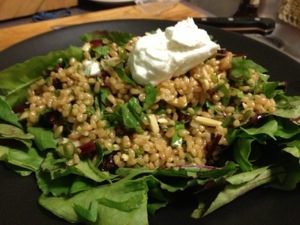
Wheat berry salad with beet greens, almonds, dried cherries and goat cheese

This is a modified recipe from Mark Bittman’s How to Cook Everything called wheat berries with walnuts. I needed to get rid of a whole bunch of beet greens before they went swishy, so I added them. I think given a nice color.

20130610-172911.jpg