ReLocavore: Redefining "local"

Back to Wisconsin, my cheesehead friends


4 Comments

Sandor Katz Fermenting Workshop

On Jul 22-23 I participated in a Fermenting workshop with Sandor Katz, the author of The Art of Fermentation and Wild Fermentation. Shelburne Farms, just outside Burlington, Vermont hosted the event. If you’ve been to Shelburne Farms before, we were in the Coach Barn for the event. Over two days we covered the basics of fermenting, lactic-acid fermentation of vegetables, a hands-on exercise making our own ferment, (day 2) dairy fermentation, fermenting grains and legumes, and fermented beverages like kombucha.

In general, I was impressed with Mr. Katz knowledge and experience with fermenting. He clearly has a passion for the art and has experimented with a lot of interesting techniques. Admittedly, that was where my enthusiasm stopped. Sorry to drag work into my blog, but I was criticizing Mr. Katz classroom technique throughout the workshop and found his teaching to be lacking. The entire second day was blocked out into 2-hour chunks with 30, 60, and 30 minute breaks between (8 hour day total). Most of the content was basic lecture with a few quick demonstrations (blueberry soda and yogurt). We had a hands-on activity after lunch on day 1, but day 2 was uninterrupted sitting. To compound the fatigue from sitting, the space had uncomfortable chairs and was not air-conditioned. We were pretty short tempered and sweaty in a 90+ degree room with little moving air. I didn’t get much out of the second day, even when I abandoned my uncomfortable chair to stand in the back of the room and hope to catch a little breeze. I did learn a lot, and the course definitely met my objective of motivating me to make better kraut and kimchee. I think I may even start to make our own yogurt.

I had three major takeaways from the event:

  1. Everything is rotting, being digested and broken down by microbes. Fermenting is just using different techniques to control the process of rotting food by favoring different microbes over others. Malted barley plus water makes sugars that can be digested by yeast to make alcoholic beer, or by other molds to make nasty undrinkable stank.
  2. Fermenting refers to two different processes. Process 1 is where yeast convert sugar to alcohol in the presence of oxygen, then acetobacteria convert alcohol to acetic acid (vinegar), again, still with oxygen. Process 2 is where lactic acid bacteria convert carbohydrates and sugars to lactic acid in the absence of oxygen. The following table may help clarify the difference between the two foods:
    Process 1 Process 2
    Microbe  Yeast  Lactic Acid Bacteria
    Substrate  Sugar  Carbohydrates and Sugar
    Oxygen  Present  Absent
    Byproduct  Alcohol + CO2  Lactic Acid + CO2
    Secondary Process  Acetobacteria convert
    alcohol to vinegar
    Food Characteristics  Alcoholic, Bubbly  Tart, tangy, softer
    Tasty Examples  Beer, Wine  Sauerkraut, Yogurt
  3. Fermentation has become very “faddish” due to confusion and misinformation about the well-supported versus not-so-well supported benefits of fermentation. Fermentation has three well-known and supported benefits: pre-digestion of food,  preservation of unstable foods, and increased diversity of gut flora. With pre-digestion, the bacteria or yeast break down the substances in the food into simpler forms. Complex carbohydrates (e.g. cell walls) become simple carbohydrates (sugars), and complex sugars (disaccharides like sucrose or lactose) become simple sugars (monosaccharides like fructose or glucose). Fermented foods are more stable over time – sauerkraut lasts longer than a plain cabbage, and yogurt lasts longer than milk. Additionally, fermented foods are home to a culture of microbes that have been shown to have benefits for diseases of the gut.The confusion comes from the secondary effects. In the process of fermenting foods, some people argue that the food becomes more nutritious, makes certain nutrients more available for the body to absorb, and may have broader effects on the whole immune system of the body. Some participants at the workshop even argued (from their own personal experience) that fermented foods helped them recover from cancer, HIV, and other serious diseases. While these are nice stories to tell, the research just doesn’t pan out to support these effects. I’m working on a systematic review of the literature and when it gets complete, I’m happy to provide detailed citations. In the few areas where there have been studies, the studies have been small and results are non-conclusive. In the absence of good evidence, it’s fine to eat fermented foods because you like to eat them and drink them, but don’t do it because you think it will be some health panacea. It’s just a fad.

I know them’s fightin’ words, so please give feedback in the comments.


4 Comments

This Week in Veg: I confess… I don’t love cauliflower

20140701-222226-80546849.jpg

I don’t hate cauliflower, but if don’t love it either. It seems to always be the leftovers from the crudités platter, or the bad cheese and cream soup, or mushy and over-cooked. So, this week it will be a challenge for us to eat an entire head. Our former CSA in Wisconsin didn’t grow cauliflower because it was too much of a hassle, and we didn’t get any in our box last year. So… I can roast it. What else?

Thanks to Sam for taking the pictures. We pickup on Tuesday nights when I am teaching. He’s masterfully taken over the responsibility of photographing and packing away the share in the fridge.


2 Comments

Locavore Survival Guide: Three Recipes that use a LOT of greens

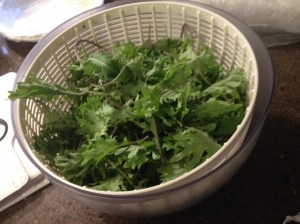
It’s getting to be the time of the year when we’re a bit sick of all of the greens we’ve been eating while waiting for the summer vegetables to show up. My fridge seems to accumulate a lot of greens and we’re not the type of people to eat salads for three meals a day. I had to get creative and come up with some versatile recipes that use up a LOT of greens. 2014-06-12 17.20.40

Some people suggest putting greens in your smoothies, and that’s a great way to get some veg at breakfast. However, I’m really not a fan of putting kale, turnip greens, arugula or other strongly-flavored greens into smoothies. Bananas and bitter sulfuric phytochemicals? Sounds nasty.2014-06-12 17.38.44

I typically use my greens up in one of the following three recipes:

  1. Quiche or Fritatta
  2. Beans and Greens (italian style) or Beans and Greens (southern style)
  3. Sauteed mixed greens


3 Comments

Sauteed Greens

I discovered years ago at Taco Bell that cooked lettuce is pretty disgusting. However, there are many more greens that are really delightful when cooked. Kale seems to be the fashionable green of the season, but spinach, turnip greens, arugula, “spicy mix” salad greens, dandelion greens and radish tops are also wonderful when cooked. However, that being said, it’s really easy to over cook greens into a disgusting blob of nastyness (think creamed spinach at a 24-hour buffet restaurant). Go easy on the heat and you can cook almost any green.

I have three different methods that I use to cook greens: the hot toss, the steam and the pourover. I think any types of greens will work with any method, but you might find ways that you like better.

Cooking Greens

Method 1 – The Hot Toss.

With the Hot Toss, you make a hot, fatty dressing and toss the greens to coat and wilt slightly.

1. Wash the greens, but leave a little moisture clinging to the leaves. It helps them cook faster.

2. Prep ingredients for the dressing. The recipe cooks quickly, so make sure to have everything set out and be ready to serve immediately. For a good hot toss, you need a very fatty dressing, so use a ratio of 4 parts fat to 1 part other stuff. Fats that work well are flavorful: butter, schmaltz, bacon grease or olive oil. For other stuff, use minced aromatics (garlic, onion, shallot), salty/umami tastes (soy sauce, anchovies, fish sauce), sweet flavors (sugar, honey, moleasses) or bitter/acidic tastes (prepared mustard, lemon/lime juice). Three combinations I like are:

  • 1 tsp minced shallot, 2 tsp honey, 1 tsp mustard with 4 tbsp butter.
  • zest of one lemon, 1 tbsp lemon juice, 1 tsp anchovy paste with 4 tbsp butter or olive oil. (especially tasty with Lacinato kale or dandelion greens.)
  • 1 tsp minced garlic, 2 tsp soy sauce, 1 tsp chinese mustard with 3 tbsp vegetable oil and 1 tbsp sesame oil.

3. Heat the fat in a nonstick skillet. Cook the aromatics (if you’re using them) until soft. Add the other flavors and whisk to combine. (This is the “hot” part.)

4. (Here comes the “toss” part.) Take the pan off the heat and add about a third of the greens, using tongs to toss them with the hot dressing. Once those greens are wilted, add another third of the greens and keep tossing with the tongs. Once those greens are coated and just beginning to wilt, add the last third and toss briefly. If the greens aren’t wilting, you might need to put the pan back on low heat to keep the dressing hot. Serve immediately.

Method 2 – The Steam

With The Steam, you steam the greens until crisp-tender then combine at the end with a simple, light sauce.

1. Like above, wash the greens and leave a little water clinging.

2. Prepare ingredients for the dressing. Unlike the hot toss, the dressing should be mostly flavorful liquids, especially vinegars and chili sauces. You can use a little fat, but don’t use very much. I don’t often use aromatics either. For each combination, use about 3 parts liquid to 1 part other stuff.

  • 3 tbsp rice wine vinegar and 1 tbsp chili garlic paste or a big squirt of sriracha
  • 2 tbsp mirin (Japanese sweet cooking wine), 1 tbsp water, 1 tbsp soy sauce, sprinkle of toasted sesame seeds
  • 3 tbsp white wine and juice of one half of a lemon.

3. Heat the pan over medium-high heat. Add all of the greens in one giant pile. Pour the liquid (vinegar, mirin/water, or wine) over the top of the greens. Quickly cover with a tight-fitting lid. The liquid will turn to steam and cook the greens. After a minute, take off the lid and turn the greens with tongs, making sure everything is wilting. Thicker greens like kale or bok choi will take another minute to steam.

4. Once the greens are tender, turn off the heat, add the rest of the dressing ingredients and toss to coat.

Method 3 – The Pourover

With The Pourover, you make a super-rich sauce or dressing and pour it over the top of the arranged greens, letting the greens wilt with the heat and allowing lots of extra sauce to pool in the bottom of the serving dish. This ain’t healthy. Sorry.

1. Again, wash your greens. However, use the salad spinner or towels to get as much moisture off as possible.

2. Arrange your greens artfully in a serving bowl with a bottom well to collect extra sauce or dressing. You can add other salad fixings to this recipe too, making into more of a meal. Some possible additions: chopped boiled egg, bacon, croutons, finely shredded or julienne cut vegetables, green onions, etc…

3. Make a really unhealthy sauce. My favorites are:

  • bacon grease with salty beef boullon (use a cube) and cider vinegar
  • Burre Blanc (lemon-butter sauce. See Child, J. Mastering the Art of French Cooking vol 1, Chapter 1.)
  • Hollandaise sauce (see above, same chapter)
  • Basic mayo, heated gently.

4. Pour the really unhealthy sauce over the greens. Really pour a LOT of it over the top. The point is to drown the boring stuff in really tasty stuff. Be generous. Serve from the bowl, and use a big spoon to add any sauce or dressing from the bottom of the bowl back on top of the individual servings of greens.


Leave a comment

Mufaletta: We ain’t f*cking around… in Sandwich Form

2014-06-22 18.15.05When I want a sandwich, I don’t want a little turkey on bread. I either want chicken salad on a toasted croissant or I want muffaletta. Chicken salad is tempting fate with botulism and celery seeds. Muffaletta is pure NoLa goodness.

A little history, the Central Market in New Orleans supposedly invented the muffaletta sandwich, which is typically mortadella, salami, ham, provolone or swiss cheese on a 8″-12″ round loaf of bread. The real showstopper is the “olive salad” added to the top, which is chopped olives with giardiniera, garlic, herbs and oil. The sandwich is named after the bread – a soft italian loaf with sesame seeds baked into the top, however, it seems silly today to actually just buy the bread… The sandwich is so much better. According to the daughter of the original owner of the Central Market, her father served bread, meat and cheeses to Italian immigrant farmers coming to the market to sell vegetables. Necessity being the mother of invention and all, the sandwich was more portable and easier to eat, rather than balancing the ingredients on one’s lap.

I learned to make a Muffaletta sandwich when I worked as a teenager at the now-defunct Opera House cajun restaurant in Pecatonica, IL. I remember the chef weighting the sandwiches down with gallon-sized metal cans of tomato sauce. I never remember seeing any of the tomato sauce get used in the restaurant – I think the cans were there because they were the right size and weight to make a great muffaletta.

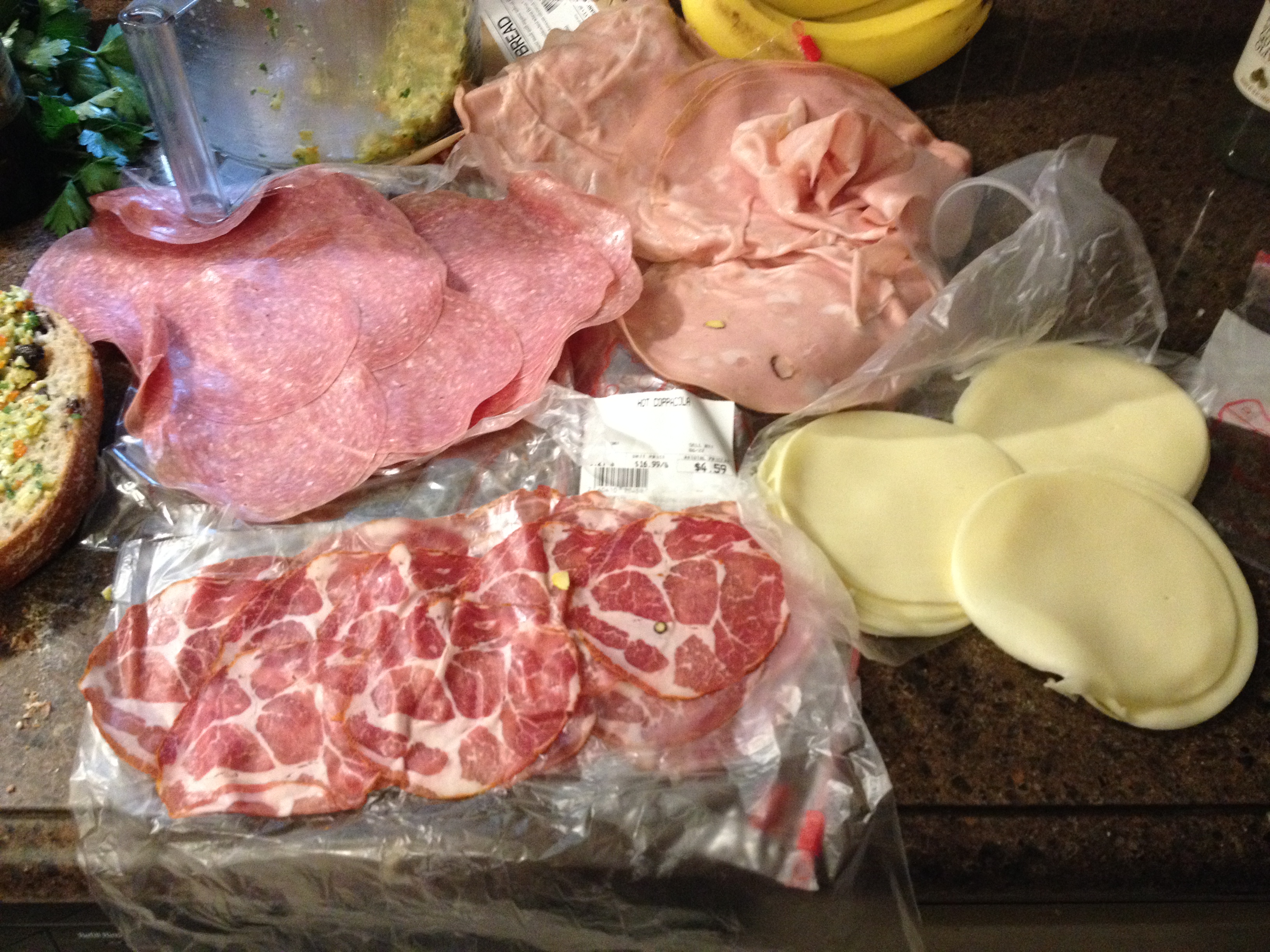
Ingredients: 1/2 lb mortadella, 1/2 lb salami, 1/4 lb hot capricola, 1/2 lb provolone cheese. All sliced thin, but not paper thin. (Not shown: olive tepenade and a large round loaf of crusty bread.)

Ingredients: 1/2 lb mortadella, 1/2 lb salami, 1/4 lb hot capricola, 1/2 lb provolone cheese. All sliced thin, but not paper thin. (Not shown: olive salad and a large round loaf of crusty bread.)


Step 1: Make olive tapenade. In a food processor, combine 3 cloves garlic, 12 oz pimento stuffed olives (drained), parsley, and olive oil. Process until chunky. Cut bread in half and hollow out the top to make more room for sandwich. Spread 2/3 tapenade onto top and bottom of bread.

Step 1: Make olive salad. In a food processor, combine 3 cloves garlic, 12 oz pimento stuffed olives (drained), fresh parsley, and olive oil. Process until chunky. Cut bread in half and hollow out the top to make more room for sandwich. Spread 2/3 tapenade onto top and bottom of bread.


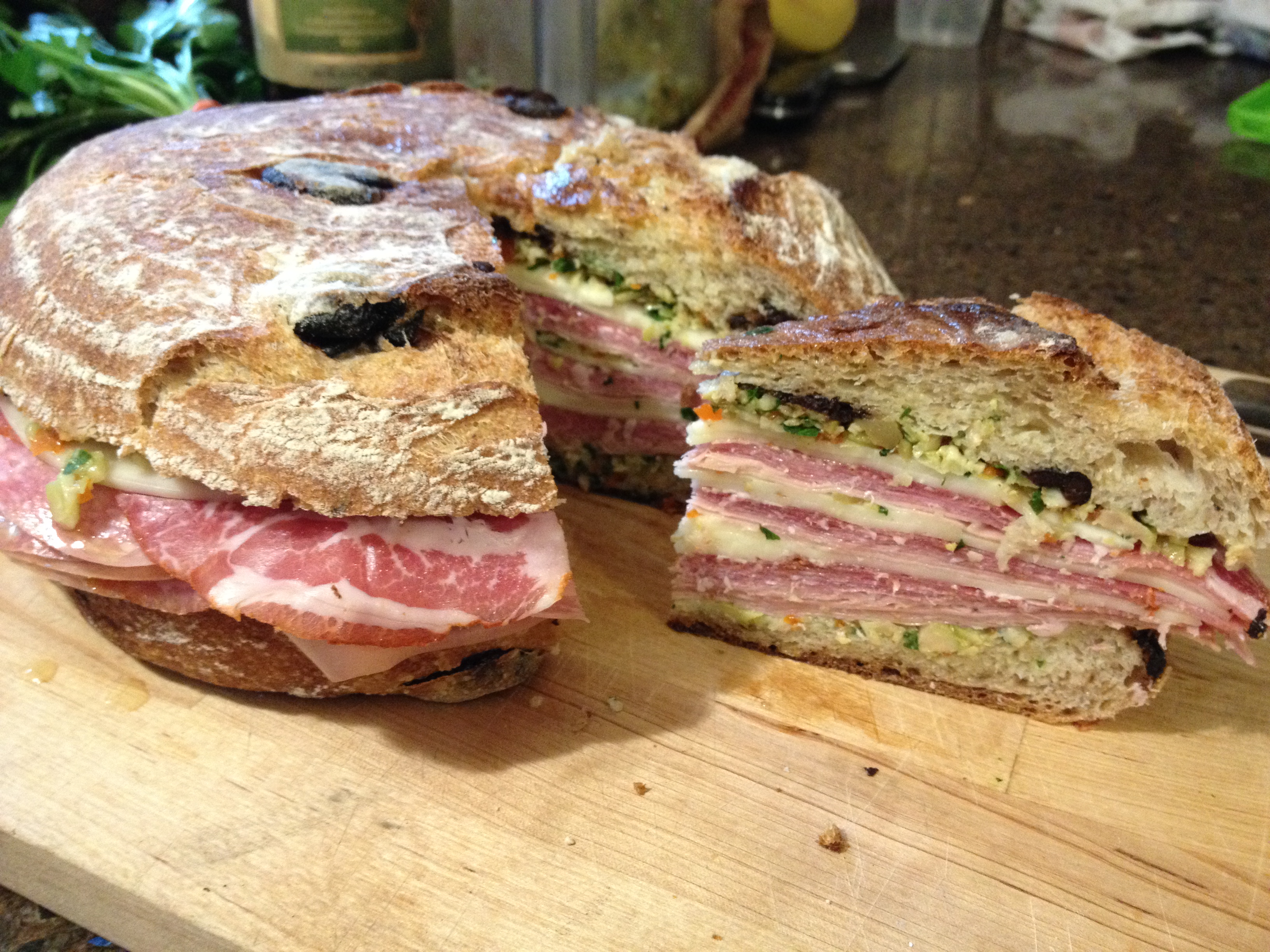
Layer meats and cheeses, and remaining 1/3 of tapenade. Weight sandwich and press for 30 minutes. I'm using the Holy Trinity: McGee, Bittman and Child.

Layer meats and cheeses, and remaining 1/3 of tapenade. Weight sandwich and press for 30 minutes. I’m using the Holy Trinity: McGee, Bittman and Child. Slice into wedges and serve. Wrap leftovers (ha!) and it gets a lot better after a day in the fridge and a trip to the office in your bag.


2 Comments

Fresh Green Pea Soup with Pea Shoots

2014-06-20 18.31.09This past week, we got a bag of pea shoots in our CSA. New vegetable for me. I was just going to put them into a salad and eat them like any other green, but I decided to look around a bit for a good recipe that could feature pea shoots. I found a recipe for fresh pea soup that I was able to make with the pea shoots and a bag of frozen peas from last year. I saved a few pea shoots to put on top of the soup, but the majority of the shoots were cooked with frozen peas and chicken stock, then pureed til smooth.

Of course, pureeing hot soup in the blender, I had a few minor “explosions” and the dog apparently likes the green pea soup – he licked up every last trace from the floor. Good dog. Get your veggies.

Since I avoid the lactose sugar, I used greek yogurt instead of creme fraiche to give the soup some extra body. The process of making yogurt converts lactose sugar to lactic acid, hence, I can usually eat well-made plain yogurt without too many issues.

We served the soup warm, but not hot. I think it would have also been quite tasty chilled.


Leave a comment

Massaging vegetables: Cucumber Sunomono

Cooks Illustrated suggests massaging kale. “Kneading and squeezing” will break down cell walls. They recommend 5 minutes for standard kale and 1-2 minutes for lacinato and red Russian kale.

Here’s the thing… the Japanese technique of sunomono also uses massage to break down cell walls and make vegetables softer and more tender. The difference is the Japanese method includes salt, which helps break down cell walls and extract moisture, but then rinses the vegetables to remove the excess saltiness.

I think this calls for Sunomono, or Japanese cucumber salad! This dish is great on a hot summer day, served with cold soba noodles and iced dipping sauce.

Sunomono

Serves 2 generously.

  1. Peel, cut in half the long way and seed one cucumber. Cut into thin slices on the mandoline.
  2. Mix cucumber and 1/2 tsp salt in a large bowl. Gently rub the cucumbers with salt until they become tender, but not limp, and give away lots of liquid. Gently squeeze the cucumbers to remove any excess liquid. Save the liquid to make a dressing in step 3.
  3. In a microwave-safe glass measuring cup, measure out the cucumber liquid to get 1/4 cup. If theres too much, pour out excess. If there’s not enough, add water. Mix a pinch of dashi granules, 2 tbsp rice vinegar, 2 tbsp soy sauce and a big pinch of sugar in with the cucumber water. Microwave for 30 seconds and stir to dissolve the dashi and sugar.
  4. Arrange half of cucumber slices in the center of a bowl. Pour over a generous amount of dressing, leaving a puddle in the bottom of the bowl. If time allows, chill to be ice-cold.


Leave a comment

Yamaimo or Snot Potato

This is my first experience with yamaimo, mountain yam or slippery potato – I will affectionately call it the snot potato. Recipes for Japanese Pizza or Okonomiyaki call for a tablespoon or more of grated snot potato and grating it produces a thick mucilage which makes okonomiyaki pancakes more stretchy and elastic. See the video for proof of snottiness. On our recent trip to Boston to shop the Asian markets, we came home with a 4″ piece of yamaimo and were able to use it to cook okonomiyaki.

As far as I can tell the snot potato doesn’t have any noticeable taste or smell. But it did make our okonomiyaki more elastic and gave it a chewy texture.

Thanks to Gypsy Swing Revue for the music.


1 Comment

The least local thing we eat – Japanese Foods

Sam and I have a love for Japanese food. I don’t quite know where it all came from, but we’ve incorporated a lot of key Japanese foods into our diet, and we are always exploring new Japanese dishes. Warning flag… This is NOT a post about local foods. This is actually a post about the least local thing we eat… Nonperishables imported from Japan. Claims of locavore hypocrisy are welcome in the comments!

Sunday, Sam and I took a trip to Boston to scout out the Japanese and Asian grocery stores and came home with a mess of pantry staples. There are a lot of key pantry staples that we just can’t substitute. Maki at JustHungry has a great review of what these basic foods are and how to cook with them. 

1. Yamasa soy sauce. 2.

1. Yamasa soy sauce. 2. Kombu, dried kelp used in making dashi stock. 3. Hiyashi chuka noodles: Sesame vinegar dressing with hot mustard. 4. Brown sushi rice. 5. Hon mirin. Not the shitty corn syrup stuff. 6. Fried tofu pockets for making inarizushi. 7. eggplant pickles (the only way I will eat eggplant). 8. More noodles. 9. Cucumber pickles. Totally unlike all American Kosher Dills. 10. Tonkatsu sauce. 11. Takuan, pickled daikon radish. 12. Ripping hot spicy mustard. 13. Salmon Furikake. It’s a mix of sesame, nori (seaweed sheets), and dehydrated salmon that you shake on top of rice or tofu. 14. A foam skimmer. It’s a joke. I’ll explain later. 15. Yamaimo or slippery potato or mountain yam. 16. Botan rice candy. 17. Ume plums. Pickled apricots with a minty herb called shiso. 18. Beni Shoga, or pickled ginger. Unlike the stuff at sushi bars, this has no added sweetener and is a little salty. 19. Fish cake. This is pollack that is died and pressed into shapes. I serve it in noodle dishes. 20. More noodles, but this kind is fresh instead of dried. 21. Kouya dofu, or freeze-dried tofu. I’ll use it to make mochi nuggets, like vegan chicken nuggets. 22. More fish cake, but this time extruded into a log with a pink spiral shape.

We visited two different Asian groceries:
Ebisuya Japanese Market in Medford, MA.
65 Riverside Ave Medford, MA 02155
781-391-0012
info@ebisuyamarket.com
This was a Japanese-only grocery store and where we bought about 90% of our pantry staples. They had some fresh foods, but mostly shelf-stable foods. They were operating a busy fish counter and had a sushi bar attached to the grocery. The whole store was the size of a big convenience mart. I was very impressed with the selection of foods at Ebisuya. Someone with a great love of Japanese food is making sure the Japanese of Boston metro area have access to fine-quality imported foods. They even had fresh green ume plums!

H Mart
43 Middlesex Turnpike, Burlington, MA 01803
781-221-4570
H Mart is the Big Box asian grocery. Frankly, it was very intimidating to be there on a Sunday afternoon – the whole store was PACKED with customers. There was a wait for parking. H Mart is mostly Korean goods, but they carry a lot of Japanese foods as well, due to the overlap between the cuisines. We only picked up a few items there because Sam and I were both completely overwhelmed by the size and business of the store. We’ll try to go back midweek and midday and hopefully it’s not so crazy. I think we could find everything we wanted there, and the prices were about comparable to Ebisuya. H Mart does have a large produce section, if we’re wanting produce for whatever reason.

Over the next few weeks, I’ll be posting some videos and explanations of how I use a lot of these foods in my cooking.