I’m hoping to make something tasty this weekend with a 5-bone rib-in pork roast that has been sleeping in my chest freezer. Somehow the idea of pork and garlic really appealed to me, but so did the idea of honey glazed ham. Bringing these two concepts together, I made roast garlic jelly which I will use to baste the pork roast.
Unfortunately, what I wanted to make was roasted garlic JAM – with lots of chunks of roasted garlic and a little sweetness. Best-laid plans of mice. I ended up with Jelly instead – wine, vinegar, sugar infused with roast garlic. To make it a bit more interesting, I added the garlic cloves back into the jars, but they floated up to the top and separated from the jelly. I guess I’ll just roast more garlic to use with the pork roast.
I am way too excited about 10% sale on canning supplies at West Leb Feed and Supply… On the shopping list: Jar Lids, wide-mouth pints, and maybe a 7-pint rack for my 20-gal water bath canner.
Yes, I get my pet food and canning supplies at the same store.
This was the last weekend of major canning for the year. Sam and I made 20 pints of Salsa, following the recipe from the USDA Home Canning Guide.
I’ll have some wrap-up statistics later this week. But, for now, let’s start with the basics:
18 lbs of roma-style tomatoes. 5 lbs with our CSA. 10 lbs @ $1.60/lb (Seconds). 3 lbs at $4/lb (Firsts).
2 lbs tomatillos for $3/lb.
3 lovely anaheim chilies for $0.75/each.
3 bell peppers at $1/ea.
3 yellow onions for $2.
To that we added:
4 jalapinos from our CSA.
1 lb Garlic from our CSA.
1/2 lb red onion from our CSA.
2 cups lemon juice.
3 tbsp salt
1 tbsp black pepper
4 tbsp cumin
2 tbsp dried ancho chili powder
4 tbsp dried oregano
4 tbsp minced fresh cilantro
We did most of the pepper, onion and garlic chopping the night before and the WHOLE FRIDGE reeked of onions. I’m not doing that again next year. But it did save us about an hour of chopping.
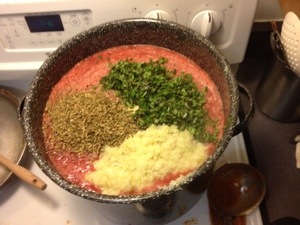
The salsa before cooking. I like the color contrast of the red onions.
Going back to the earlier post on when to water bath can vs pressure can, tomato salsa is one of those marginal products that, depending on the ratio of onions/peppers/garlic (low acid vegetables) vs tomatoes (high acid vegetables), the overall acidity may be too low to water bath can. In this recipe I add 2 cups of lemon juice to ensure that, no matter how many peppers and onions I add to the salsa (and I like a LOT of peppers in my salsa) the acidity will certainly be high enough to water bath can my salsa. Good thing too, because pressure canned salsa gets much too over-cooked and is more like a smooth taco sauce than a chunky salsa. In addition to tomatoes, I add tomatillos to my salsa. Tomatillos have more pectin than ripe tomatoes, and so they add thickness and body to the salsa as it cooks.
We ended up with 20 pints of salsa. We water-bath canned 18 pints, then ran out of jars, and put 2 pints (a quart, for those inclined to the backwards English system of measure…) into the fridge for use later this week. We’ll make Chicken Tortilla Soup for dinner one night, and I may split the remainder for Sam and I to take to work to share.
The salsa after cooking for 30 minutes, just before being canned. Note the rings on the inside of the pot. The salsa reduced about 2 inches during the 30 minutes of vigorous boiling.
This weekend was another 55 lbs of tomatoes into jars. I was expecting to can 40lbs, but I got an extra “surprise” 15 lbs in my CSA box this week. I canned and dried tomatoes all weekend. Cost was $50, plus the extra 15 lbs built-into our weekly CSA cost. I ended up with 21 quarts of tomatoes. I’ll love it come February, when my Superbowl Chili is made with home-canned tomatoes… Until then, I’m getting a bit sick of ’em.
Next weekend is salsa – a less-involved process, since I don’t have to skin or seed the tomatoes.
Do you know about La Tomatina? In the center of Buñol, a town in Spain, the town erects a gigantic pole, ties a ham to the top, and covers the pole with lard. This is the Phallic Imagery part of the festival. People congregate and form a human tower in order for one person to get to the top of the slippery pole and cut down the ham. Once the ham is down, the Yonic (opposite of Phallic) Imagery portion of the celebration begins. Huge truckloads of tomatoes are emptied into the streets and people throw tomatoes at each other. Tomatina means tomato-throw. Chaos and hooliganism follows.
At about this time in the canning season, I feel like I’m in the streets of Buñol, and being pelted with tomatoes from all sides.
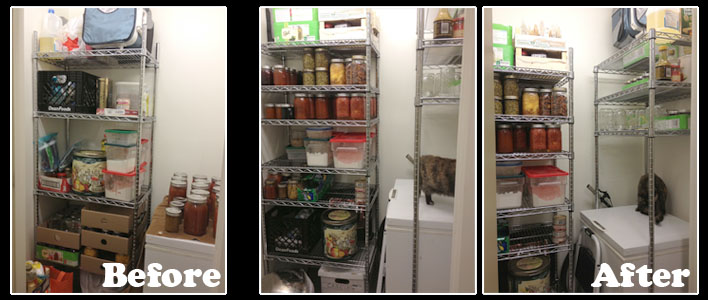
Sam and I took a drive into Boston to get more shelves for our pantry. From the before picture on the left, we needed more shelves to hold canned foods. The cardboard boxes on the bottom shelf were holding all of the jars. I did some measuring and found we could fit a whole second shelving unit above our freezer. So we came back with some additional shelves for the left unit, and the new right unit. We also made more space for Sam’s baking fungibles, and for the cat and dog food.
None of my canning cookbooks or guides had a recipe for onion jam, so I turned to the internet.
Fortunately for me, I found this recipe from Serious Eats for Onion Confiturra. A confiturra (or confitura) is the Spanish or Portuguese word for a “preserve” or “conserve.” It seemed like a tasty recipe, so I figure I could bank some onions on it. I found sweet onions at the farmer’s market for a reasonable price and herbs were in abundance this week.
Woah Nelly! Did this smell GOOD when it was cooking. Onions and rosemary! Yes, Please!
And the taste? Fantastic. Not too sweet, not too sour. It has wonderful umami flavors and just a little bit of carmelized onion taste. The texture is very soft, with noticeable pieces of onion. 4 pounds of onions made 3 cups of jam.
Some ideas of what to do with this magic sauce?
Serve with rustic bread and cheese
Spread over flatbread and bake in the oven
Top a warm wheel of brie
Add jalapiños and baste over pork chops
Spread on savory scones
Whip with butter or cream cheese to top bagels
Spread on a turkey sandwich
Spoon on top of squares of puffed pastry, fold into a triangle. Bake to make onion turnovers.
I make boring tomato sauce. By “boring” I mean “plain.” I don’t jazz it up with too many spices, or add chunks of tomato, mushroom, red pepper… It’s basically reduced tomato puree with some minimal seasoning. There’s a reason for making boring sauce. Interesting tomato sauce – with mushrooms, meat, vodka, roasted red peppers, fresh basil, etc… is only useful as tomato sauce… you put it on pasta. You make lasagna! Voila! But boring tomato sauce is infinitely versatile. I can add cumin, oregano, vinegar and sriracha and turn out a decent enchilada sauce. Add stock and it becomes a tomato soup base. Reduced with vinegar, ketchup, and mustard and it becomes barbecue sauce. Tonight, we combined the sauce remaining after filling the jars with sausage, shrimp and rice and had jambalaya. I can still add mushrooms or roasted red peppers and dump it on pasta… Boring tomato sauce is like the pluripotent stem cell of the tomato world. (Well, technically the tomato is the pluripotent stem cell of the tomato world, but… the metaphor isn’t great… so sue me.)
Step 1: Puree Tomatoes.
Pureeing tomatoes is a fun process with the food mill attachment to the Kitchenaid Stand Mixer. I estimate that I pureed 20 lbs of tomatoes into about 14 to 15 quarts of tomato puree.
Step 2: Add onions, garlic, spices.
Clockwise from the top is 1/2 cup chopped fresh basil, 3 onions chopped and 5 cloves of garlic through the press and sautéed until soft, and 1/4 cup dried oregano. Not shown is brown sugar, salt and pepper.
Step 2: Cook and reduce.
We started the sauce about 8pm on Saturday, and cooked it overnight in the oven. Then, in the morning, it went back on the stovetop to cook through until about 3pm. Typically, we would have cooked the sauce overnight and seen a reduction of about 50% and canned it first thing in the morning. However, it’s REALLY damn humid here, so there was no place for the moisture to go… It took a really long time to reduce.
Step 3: Can.
I had enough tomatoes to make 7 quarts of tomato sauce, along with another 11 quarts of quartered tomatoes in their own juice. Those little jars are the onion jam that I’ll describe in a later post.
A steam canner. A water bath canner with a rack to hold jars. A pressure canner with a gauge to tell the inside pressure.
Canning is the process of sterilizing and sealing food into air-tight glass jars. Canned goods can last for years at room temperature as long as the seal is intact. Foods that have been canned can retain most of the nutrients and flavors of the fresh food, and, for some foods, canning actually helps release nutrients and flavors that aren’t present in the raw food. I’m going to explain differences among the three types of canning to help you decide when to use each method.
The whole point of canning is to heat up food to kill off any wee beasties that might spoil the food. The most concerning wee beastie is Clostridium botulinum which produces botulism toxin, a powerful neurotoxin. C. botulinum mostly hangs around in a spore form which can only be killed with heat over 240F, but can start metabolizing and producing the toxin in low-acid environments. Additionally, heating up the food also heats up the air in the jar, and as the jar cools, the rubber seal helps form a negative pressure space that seals the lid onto the jar.
There’s three types of canning: steam, water and pressure. Each method has a different way to heat up the contents of the jars and kill off wee beasties.
Steam canning uses a little bit of water which is vigorously boiled to envelope the jars in hot steam to raise the temperature of the jar contents. I personally don’t use a steam canner. I realize that the thermo-conductive potential of hot gas is the same as hot liquid, but something about it gives me the willies… I can’t believe that a hot gas is enough to sterilize my food. Additionally, most canning books that I have tested their recipes in water bath or pressure canners. And, by “testing” recipes, I’m not talking about tasting only for flavor, but also to ensure the food is sterile and sealed. Untested recipes could mean unsealed jars or not sterile foods. I’m not willing to take the risk of converting recipes to steam canning from other canning methods.
Water bath canning uses boiling water at 220F (or thereabouts, depending on your altitude) to sterilize the jar contents. However, some wee beasties still thrive at temperatures above 220F, but, lucky for us, they can’t survive in acidic, sweet or salty environments. So, if a food is sweet, salty or sour (e.g. jams, pickles, naturally acidic fruit) then you only have to heat it up to 220 to kill off most of the wee beasties, then the sweet, salt or acid keeps the other beasties from metabolizing and spoiling your food. A water bath canner is nothing fancy, just a deep pot with a lid.
Unfortunately, if your food isn’t sweet, salty or sour, then heating it up 220F only kills off some of the wee beasties, leaving the hearty high-temperature beasties to thrive in your foods. This is how you kill people with botulism… Foods that aren’t sweet, salty or acidic, like vegetables and meats, don’t have a second method for retarding spoilage, so you have to get the food REALLY REALLY hot to kill off the wee beasties. The only way to get stuff in jars hotter than 220F is through increasing the pressure – hence the third method of canning is pressure canning. Because of the amount of heat and pressure necessary, low-acid vegetables like beans (green or shelled), potatoes, corn, peas, mushrooms, and all meats, eggs or fish MUST be pressure canned to kill off the wee beasties. A pressure canner is a special pot with a tight lid, an air-tight seal and a valve or weight to adjust the pressure.
Water Bath or Pressure Can? Technically, any food will be sterilized using pressure canning. But with sweet, salty or acidic foods, pressure canning is overkill. The amount of heat and pressure applied to the food to get it sterile will break down tender fruits, turn pickles into mush, and make jams hard and unspreadable. If your food is really sweet, salty or acidic, then water bath can it – it’s gentler on the food. There are some foods that are marginal in their sweetness, saltyness or acidity. For example, tomatoes are acidic, so whole tomatoes can be water bath canned, but when you cook tomatoes (heat reduces acid) with onions (low acid), and bell peppers (low acid) to make tomato sauce, you may reduce the acid enough to require pressure canning. Some fruits are acidic when unripe and less acidic (more sweet) when ripe (e.g. apples, pears) so the ripeness of the fruit may necessitate pressure canning. The solution is to test the acidity using pH strips or a pH meter and either add lemon juice or vinegar to bring the acid up and water bath can, or to pressure can the low-acidity food. According to the USDA Complete Guide to Home Canning, (Guide 01, page 4) the cutoff point is 4.6 pH. Lower than that (more acidic) and your food is fine to water-bath can. More than that (less acidic) then your food must be pressure canned. (Note most foods fall into the range of 3.0 to 7.0 pH, and few foods are alkali or basic and have pH between 7.0 and 14.0.) Additionally, any food with meat, regardless of how acidic, MUST be pressure canned. So, if you add italian sausage to your tomato sauce, it MUST be pressure canned.
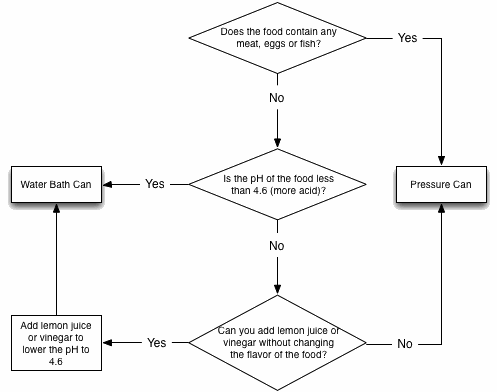
In summary, avoid steam canning unless you have specific recipes that are tested using a steam canner. Follow the flowchart to determine if you water bath or pressure can the food.
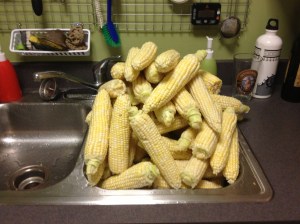
The guy at the farmer’s market did a double-take when I asked him for 9 dozen ears of corn. He though I had asked for 9 ears of corn. And at $6-9 PER DOZEN I was rethinking my decision and checking the amount of cash I had in my wallet for this venture. The prices were the same inflated, yuppie-priced, markup flimflam that I’ve come to expect at our farmer’s market. I’m used to paying Wisconsin Fertile Farmland prices of $1-2 per dozen ears – and typically getting a baker’s dozen (13) for that price. No wonder some people believe that eating locally is financially unachievable for everybody. He was the lowest price at the market at $6/doz, but I talked the guy down to $5/doz… Still too pricy…
I’m not much of a fan of canned corn – I’d much rather have it frozen. I tried canned corn a few years back and the end product turned starchy and mushy. It was more like creamed corn than canned. Plus, frozen corn turns into 6″ x 6″ x 1″ building blocks that we use to make dividers in our chest freezer. We can keep the layers more distinct and keep the fruits and vegetables separate.
I follow the process that my mom taught me a few years back:
1.
Husk the corn. Tip: Husk the corn outside. Neither mops nor vacuum cleaners are good at picking up corn silks.
2.
Wash the corn and cut off any bad spots.
3.
I prefer to cut the kernels from the cob rather than using any of those special corn cutters. I find a sharp knife makes the least amount of mess and splatter. Corn cutters aren’t usually as sharp and spray kernels everywhere. Plus, if you have a cob that is curved, corn cutters won’t work at all. Cut the kernels from the cob. Tip: Find a bowl with a footed base – a deep lip on the bottom of the bowl used to keep the bowl upright. Turn the footed bowl upside down in your Big Damn Bowl and use the foot to hold onto the ear of corn while you cut. It stablilzes the bottom of the ear of corn allowing you to cut all the way down to the bottom of the ear of corn without hitting the bottom of the bowl.
4.
In a nonstick skillet, saute 1 tbsp of butter with 2 cups of kernels on medium-high heat for about 3 minutes or until the kernels turn darker yellow and smell really good. Add a big pinch of salt if you’d like. Vegans: use vegetable oil instead of vegan butter spread. I tried it one year with the vegan butter spread and it left a harsh chemical taste in the corn.
5.
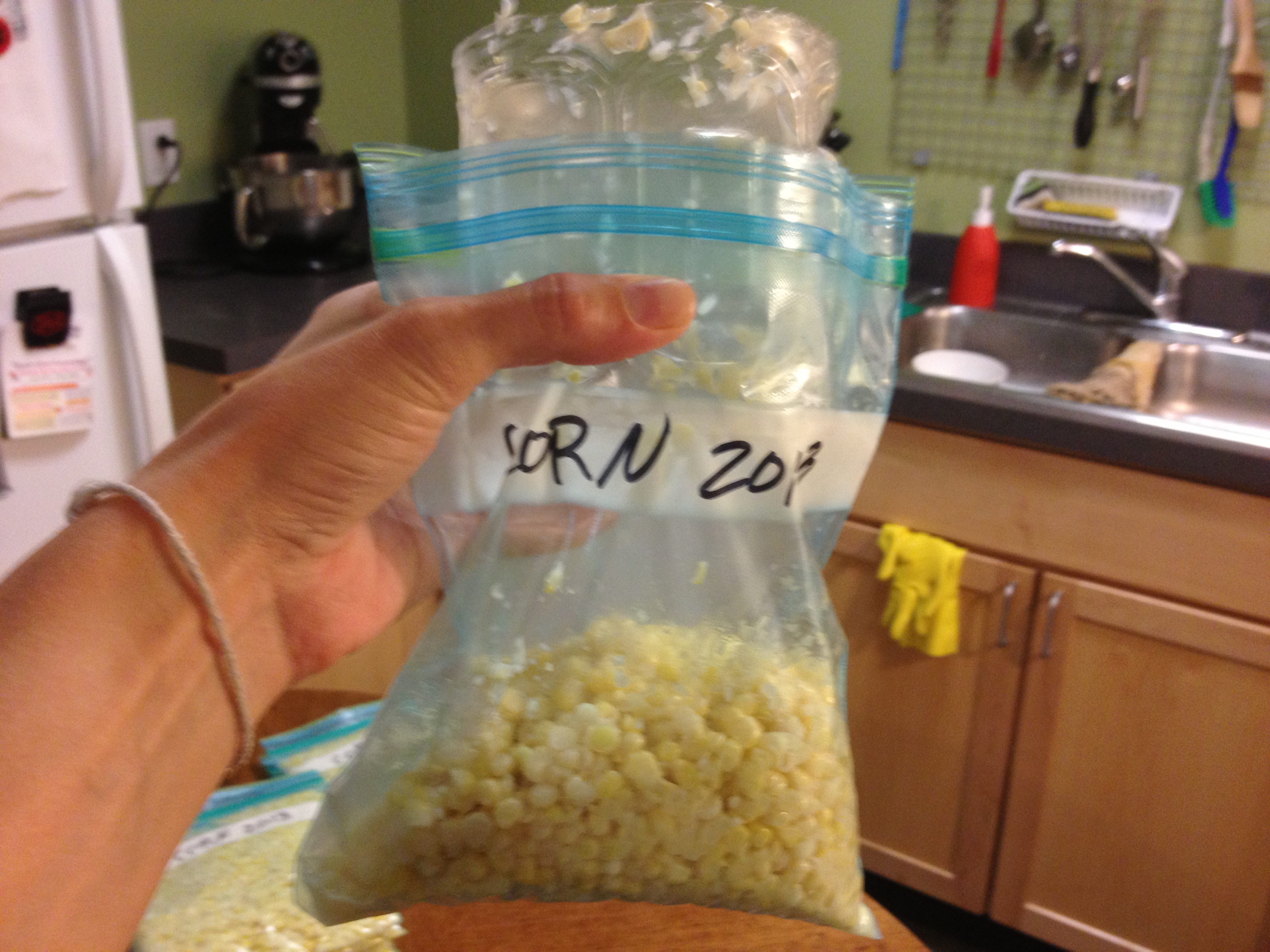
After sauteeing the corn, let it cool for a few minutes, so you don’t melt the plastic zipper bags. While you’re waiting for the batch to cool, sautee the next batch and label your plastic zipper bag.
6.
Load 2 cups of cooked kernels into a plastic zipper bag. Use your bag filler. Spread the kernels evenly through the bag and press out the air.
7.
Stack the bags into a box or cake pan so they will freeze flat. Freeze.

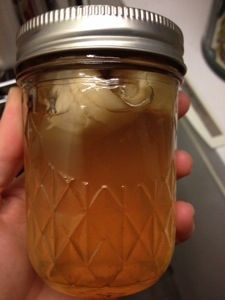
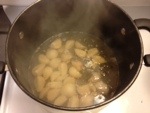
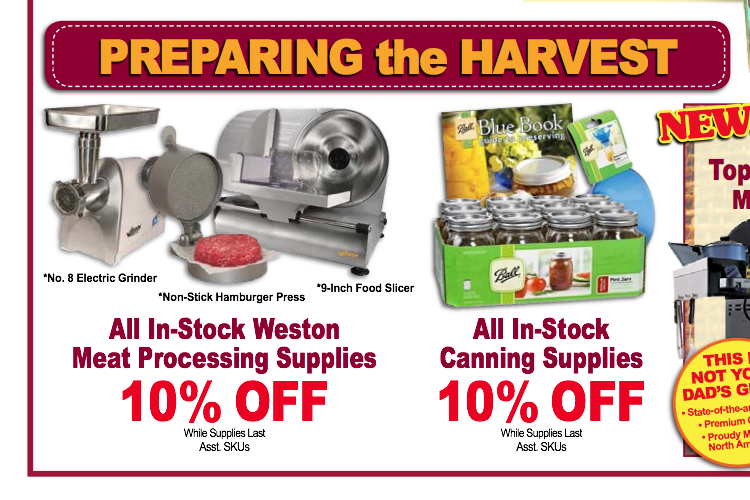
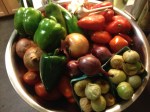
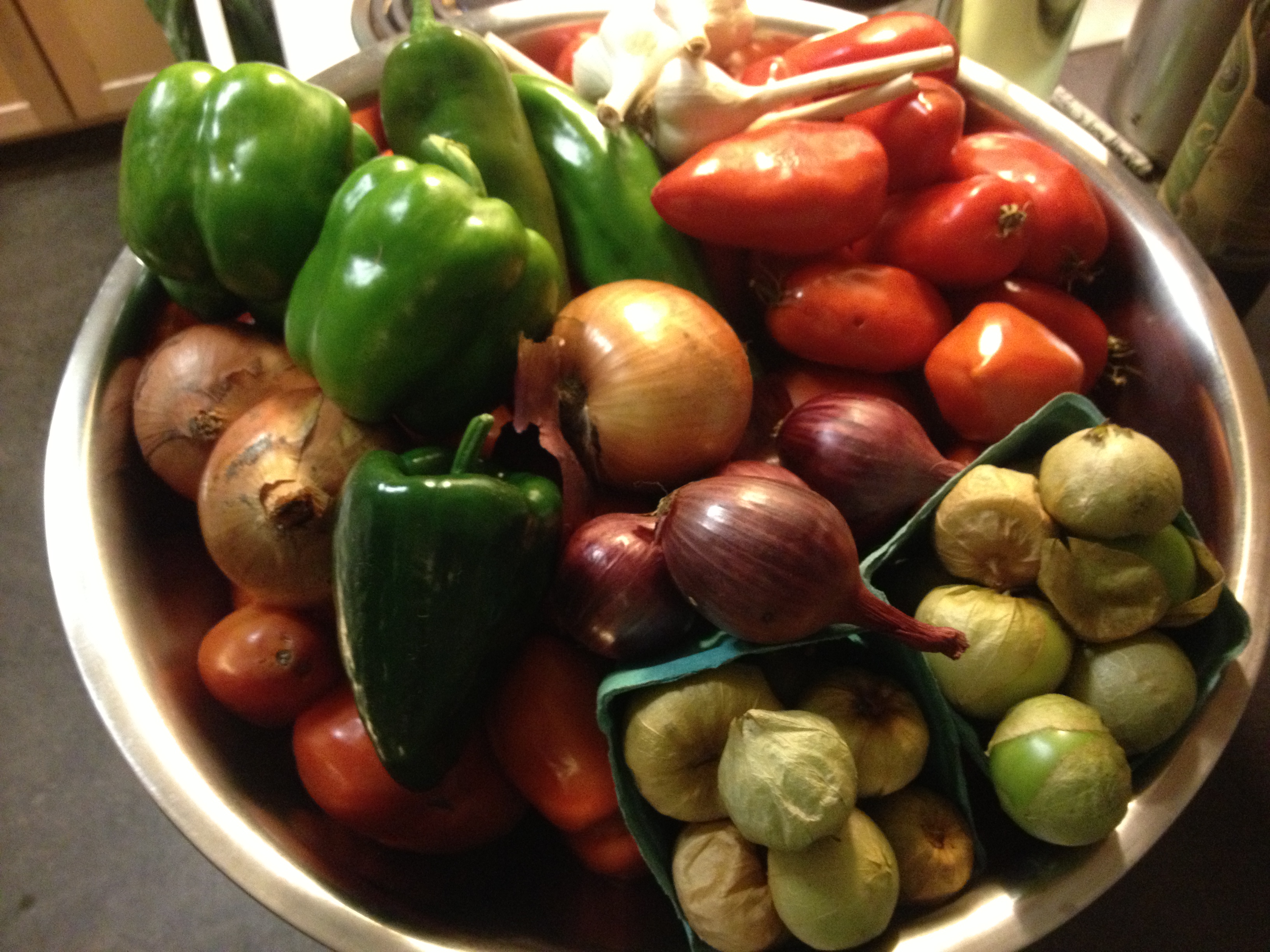
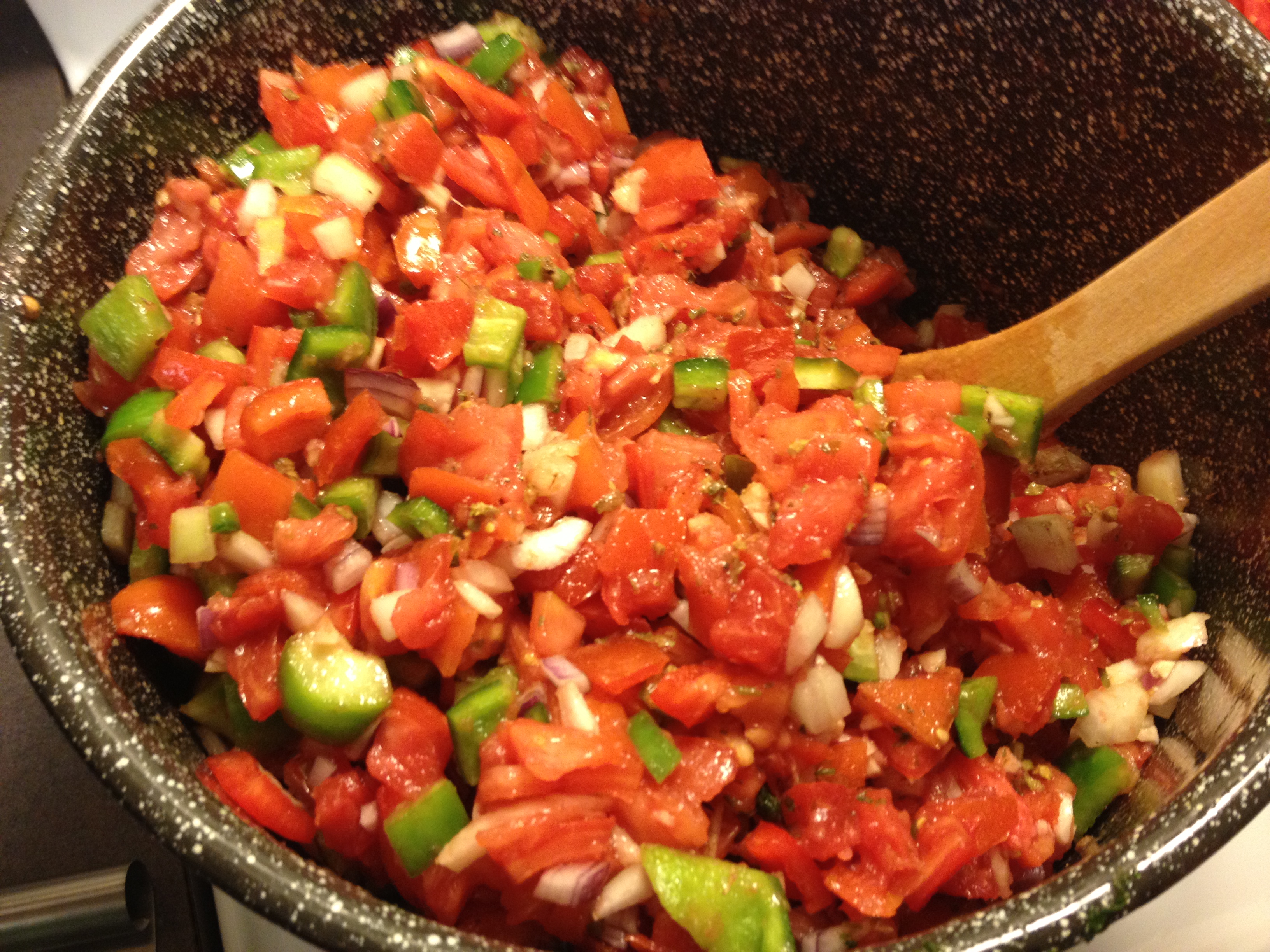

 Photo from Adventures with Dan





 A water bath canner with a rack to hold jars.
 A pressure canner with a gauge to tell the inside pressure.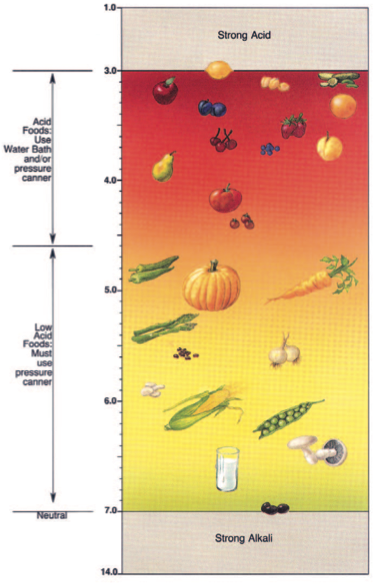




 ReLocavore: Redefining "local"