King Arthur Flour has this super-useful chart on their website to convert volume to weight. Importantly, their flours have different weights for a 1 cup volume, and you can find that specific info at this page.
I can’t say enough about baking by weight. It’s always difficult for me to bake by volume anymore – I hate sifting dry ingredients and, when it matters, I don’t want to skip the step and have overly dry baked goods. I still turn to the tablespoons and teaspoons for things like vanilla, salt, or baking powder/soda but everything else – give me weight to give me cake!
This week on The Splendid Table, Jane and Michael Stern visited Poe Boy Kitchen in Nashville, TN and raved about the carmel cake. I haven’t had caramel cake in probably 20 years. My Aunt Nollie Mae used to make one for Easter. I could remember the taste of the super sweet frosting.
Hearing about good caramel cake on the radio, I became determined that I was going to bake a caramel cake. I realize now why no one other than my Aunt Nollie May made caramel cake. It’s giant pain in the butt.
I worked off of two separate recipes. This one for the cake, and this one for the frosting.
The frosting has this unique characteristic of letting the sugar crystallize and the crystals add a touch of “crunch” to the frosting, in strong contrast to the moist but simple cake.
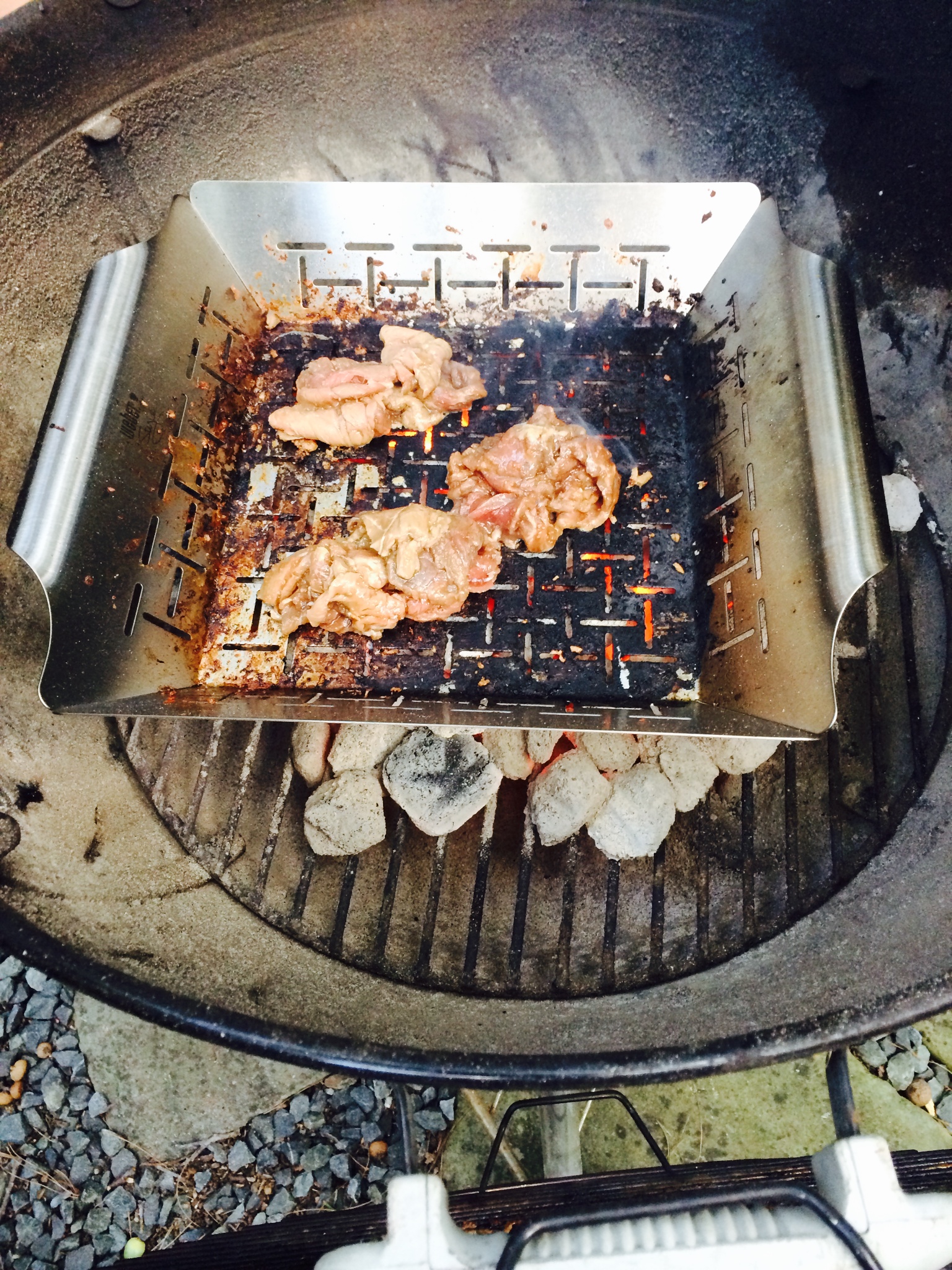
We got a lot, but still not enough heat putting the grill basket on the grate above the hot coals. So instead, we put the grill basket directly on the coals and got the heat we wanted. (Photo credit @MichaelERea)
Thin-sliced beef marinaded overnight in garlic, ginger, onion, pear puree, soy and sesame oil
Ssam sauce, a mixture of fermented soy paste (like miso), Korean hot chili paste, sesame seeds, onion, green onion, and sesame oil
Lettuce leaves for wrapping meat and ssam.
My home-fermented kimchi. SO GOOD!
Carrots quick-pickled in rice vinegar, sugar, and salt with black pepper and cardamom
The banchan – the sides that go with the meat. I made quick pickled carrots, my home-fermented kimchi, and ssam, a dipping sauce.
We ended up having eight total for dinner. My guests brought Georgean (the country, not the state) walnut and chard balls, caprese salad, homemade fruit and chili salsa. And, of course, lots of beer. In cans.
Apologies for not taking more pictures and many thanks to my guests who did take pictures!
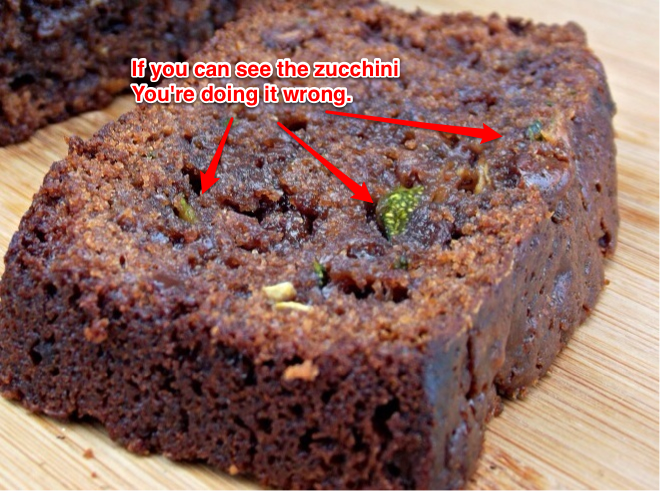
Do you really have any zucchini left after all of these recipes? This is the BEST way to hide zucchini. You’ll never know it’s there… And POOF! Two zucchini will disappear without a trace.
(Dry)
2 cups all-purpose flour
1/2 cup unsweetened cocoa powder
1 teaspoon baking soda
1/2 teaspoon baking powder
1/2 teaspoon salt
(Wet)
1/2 cup unsalted butter
1 cup light brown sugar
1 teaspoon pure vanilla extract
1 teaspoon instant coffee granules
3 large eggs
(Other)
2 cups unpeeled grated zucchini, from about 1 1/2 medium zucchini
5 2/3 oz bittersweet chocolate, chopped
Heat the oven to 350F. Grease a 9″ round or square cake pan.
Whisk together dry ingredients: flour, cocoa, soda, powder, salt.
In the stand mixer, beat butter and sugar until light and fluffy. Add eggs, one at a time, then add Vanilla and coffee.
Combine the zucchini, chopped chocolate, and a third of the dry ingredients, making sure the zucchini strands are coated with flour.
Add the remaining dry ingredients into the wet. Keep the stand mixer on low to avoid a big mess.
Remove the bowl from the mixer. By hand, fold together the zucchini into the batter until just combined.
Pour into the cake pan and spread out flat.
Bake 45 mins, or until a probe comes out clean. Let cool.
Now, if you really need to get rid of some zucchini make two cakes, then make zucchini lemon curd, and chocolate frosting. Now ou you’ve used up about 5 zucchini!
After all of this, do you really still have zucchini left???
This is a variant on the spaghetti-based Italian Fritatta.
2 to 3 medium, 1 to 2 large, or 1 jumbo zucchini
4 to 6 eggs
1 cup grated cheese like parmesan or cheddar
2 tbsp Butter or oil
Garlic or onion powder
Heat the oven to 400F and place a 10 to 12 inch cast iron skillet in in the oven to get hot.
Run the zucchini through the mandoline and cut into long julienne strips. If you don’t have a mandoline, cut into uniform slices, then cross-cut into julienne strips or grate the zucchini. Toss the zucchini with salt and pepper, garlic or onion powder, and 1/3 cup of grated cheese. Beat the eggs.
Once the oven is hot, add butter or oil to the hot skillet and swirl to coat the bottom. Remove the skillet from the oven and loosely pile the zucchini in the hot skillet. Return to the oven and cook for 8-12 minutes until the zucchini smells toasted and fragrant. Remove the skillet again from the oven and pour the eggs over the zucchini. Cook another 8-12 minutes until the center of the eggs are firm. Top with 2/3 cup of cheese and cook about 5 minutes longer, until the cheese is brown and bubbly.
Remove from the oven and let set for 5 minutes to firm up. Slice into wedges.
Late August is the only time that New Englanders lock their car doors. If you leave your car unlocked, somebody will leave you a box of orphan zucchini on your front seat. (Photo from greenstag.net)
We have the first week of our CSA where we don’t have lettuce and do have more zucchini (and other summer squash) than we expect to eat in a week. This marks a big move in our Summer eating. Up until this point, we have new vegetables trickling in for the first time – the first cucumber, the first tomato, the first zucchini. We’ve now reached the peak of novelty and descended into bounty. We must smash tomatoes into jars because there are just too many to eat. The cucumbers get huge, bitter, and neglected on the vine. The lettuce, spinach and other greens have gone to seed and are bitter and inedible. We now have to hide zucchini in other foods. We now move into crisis mode. There are vegetables coming out our ears.
I have a lot of strategies for handling the bounty. Of course, you’ve read about my adventures with canning, drying, and other odd types of preserving. I also have strategic approaches for cooking that use up lots of vegetables. I went through some of my recipes for using lots and lots of greens, and now over the next few days, I will let you in on my secrets on how to cook a lot of zucchini.
Yes, I will share my recipe for chocolate zucchini cake.
During the hands-on portion of the workshop we made a mixed vegetable ferment with carrots, napa cabbage, radishes, salad turnips and onions. The onions came to dominate the flavor but have mellowed out while fermenting.
After chopping the vegetables and adding salt, the next step is to macerate the veggies to release juices and start the fermenting. This wooden macerator was handmade by a workshop attendee and the weight of the wood made quick work of macerating the vegetables.
Sandor Katz and a vat of homemade blueberry soda.
On Jul 22-23 I participated in a Fermenting workshop with Sandor Katz, the author of The Art of Fermentation and Wild Fermentation. Shelburne Farms, just outside Burlington, Vermont hosted the event. If you’ve been to Shelburne Farms before, we were in the Coach Barn for the event. Over two days we covered the basics of fermenting, lactic-acid fermentation of vegetables, a hands-on exercise making our own ferment, (day 2) dairy fermentation, fermenting grains and legumes, and fermented beverages like kombucha.
In general, I was impressed with Mr. Katz knowledge and experience with fermenting. He clearly has a passion for the art and has experimented with a lot of interesting techniques. Admittedly, that was where my enthusiasm stopped. Sorry to drag work into my blog, but I was criticizing Mr. Katz classroom technique throughout the workshop and found his teaching to be lacking. The entire second day was blocked out into 2-hour chunks with 30, 60, and 30 minute breaks between (8 hour day total). Most of the content was basic lecture with a few quick demonstrations (blueberry soda and yogurt). We had a hands-on activity after lunch on day 1, but day 2 was uninterrupted sitting. To compound the fatigue from sitting, the space had uncomfortable chairs and was not air-conditioned. We were pretty short tempered and sweaty in a 90+ degree room with little moving air. I didn’t get much out of the second day, even when I abandoned my uncomfortable chair to stand in the back of the room and hope to catch a little breeze. I did learn a lot, and the course definitely met my objective of motivating me to make better kraut and kimchee. I think I may even start to make our own yogurt.
I had three major takeaways from the event:
Everything is rotting, being digested and broken down by microbes. Fermenting is just using different techniques to control the process of rotting food by favoring different microbes over others. Malted barley plus water makes sugars that can be digested by yeast to make alcoholic beer, or by other molds to make nasty undrinkable stank.
Fermenting refers to two different processes. Process 1 is where yeast convert sugar to alcohol in the presence of oxygen, then acetobacteria convert alcohol to acetic acid (vinegar), again, still with oxygen. Process 2 is where lactic acid bacteria convert carbohydrates and sugars to lactic acid in the absence of oxygen. The following table may help clarify the difference between the two foods:
Process 1
Process 2
Microbe
Yeast
Lactic Acid Bacteria
Substrate
Sugar
Carbohydrates and Sugar
Oxygen
Present
Absent
Byproduct
Alcohol + CO2
Lactic Acid + CO2
Secondary Process
Acetobacteria convert
alcohol to vinegar
Food Characteristics
Alcoholic, Bubbly
Tart, tangy, softer
Tasty Examples
Beer, Wine
Sauerkraut, Yogurt
Fermentation has become very “faddish” due to confusion and misinformation about the well-supported versus not-so-well supported benefits of fermentation. Fermentation has three well-known and supported benefits: pre-digestion of food, preservation of unstable foods, and increased diversity of gut flora. With pre-digestion, the bacteria or yeast break down the substances in the food into simpler forms. Complex carbohydrates (e.g. cell walls) become simple carbohydrates (sugars), and complex sugars (disaccharides like sucrose or lactose) become simple sugars (monosaccharides like fructose or glucose). Fermented foods are more stable over time – sauerkraut lasts longer than a plain cabbage, and yogurt lasts longer than milk. Additionally, fermented foods are home to a culture of microbes that have been shown to have benefits for diseases of the gut.The confusion comes from the secondary effects. In the process of fermenting foods, some people argue that the food becomes more nutritious, makes certain nutrients more available for the body to absorb, and may have broader effects on the whole immune system of the body. Some participants at the workshop even argued (from their own personal experience) that fermented foods helped them recover from cancer, HIV, and other serious diseases. While these are nice stories to tell, the research just doesn’t pan out to support these effects. I’m working on a systematic review of the literature and when it gets complete, I’m happy to provide detailed citations. In the few areas where there have been studies, the studies have been small and results are non-conclusive. In the absence of good evidence, it’s fine to eat fermented foods because you like to eat them and drink them, but don’t do it because you think it will be some health panacea. It’s just a fad.
I know them’s fightin’ words, so please give feedback in the comments.
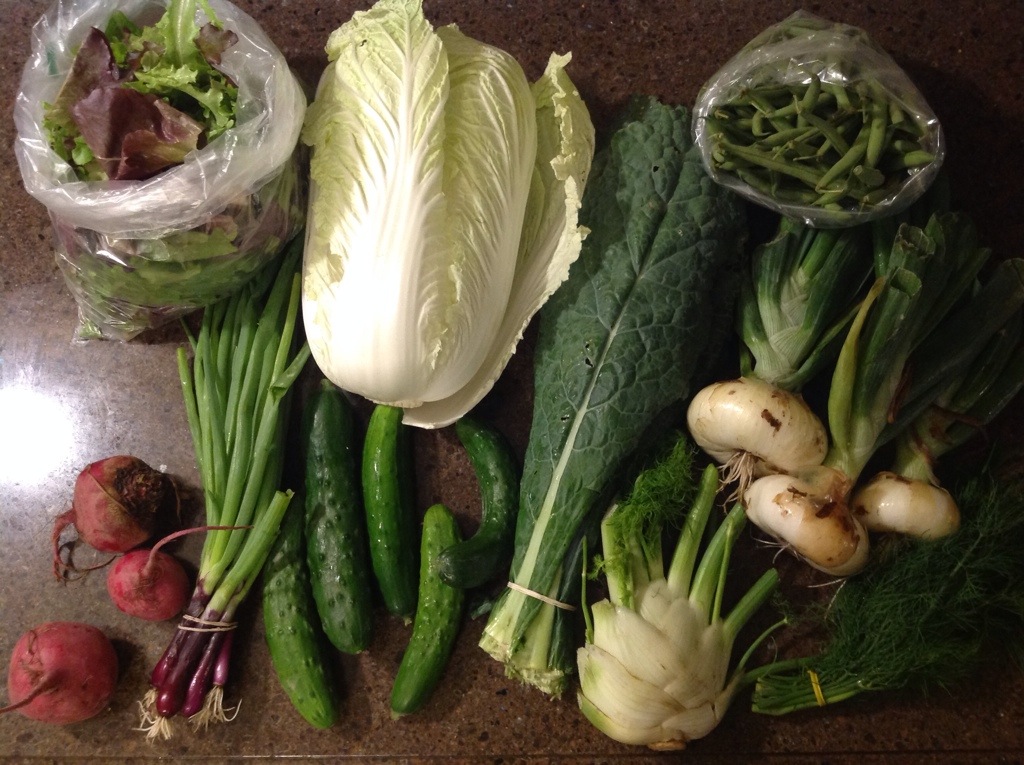
We got a healthy load of cucumbers this week. I’m completely OK with that. First, I’m at my fermenting workshop this week learning all about lactic acid fermentation and making old-fashioned “sour” pickles. Second, there’s nothing to beat the heat like an ice-cold cucumber. We’ll see what happens.
I’m also happy to see an influx of full-sized onions. We’ve been running low on aromatics over the past week. Spring onions are past, green garlic is scarce, and there’s not a ginger root or shallot to be had.


 Bookmark this!






 ReLocavore: Redefining "local"