ReLocavore: Redefining "local"

Back to Wisconsin, my cheesehead friends


1 Comment

The least local thing we eat – Japanese Foods

Sam and I have a love for Japanese food. I don’t quite know where it all came from, but we’ve incorporated a lot of key Japanese foods into our diet, and we are always exploring new Japanese dishes. Warning flag… This is NOT a post about local foods. This is actually a post about the least local thing we eat… Nonperishables imported from Japan. Claims of locavore hypocrisy are welcome in the comments!

Sunday, Sam and I took a trip to Boston to scout out the Japanese and Asian grocery stores and came home with a mess of pantry staples. There are a lot of key pantry staples that we just can’t substitute. Maki at JustHungry has a great review of what these basic foods are and how to cook with them. 

1. Yamasa soy sauce. 2.

1. Yamasa soy sauce. 2. Kombu, dried kelp used in making dashi stock. 3. Hiyashi chuka noodles: Sesame vinegar dressing with hot mustard. 4. Brown sushi rice. 5. Hon mirin. Not the shitty corn syrup stuff. 6. Fried tofu pockets for making inarizushi. 7. eggplant pickles (the only way I will eat eggplant). 8. More noodles. 9. Cucumber pickles. Totally unlike all American Kosher Dills. 10. Tonkatsu sauce. 11. Takuan, pickled daikon radish. 12. Ripping hot spicy mustard. 13. Salmon Furikake. It’s a mix of sesame, nori (seaweed sheets), and dehydrated salmon that you shake on top of rice or tofu. 14. A foam skimmer. It’s a joke. I’ll explain later. 15. Yamaimo or slippery potato or mountain yam. 16. Botan rice candy. 17. Ume plums. Pickled apricots with a minty herb called shiso. 18. Beni Shoga, or pickled ginger. Unlike the stuff at sushi bars, this has no added sweetener and is a little salty. 19. Fish cake. This is pollack that is died and pressed into shapes. I serve it in noodle dishes. 20. More noodles, but this kind is fresh instead of dried. 21. Kouya dofu, or freeze-dried tofu. I’ll use it to make mochi nuggets, like vegan chicken nuggets. 22. More fish cake, but this time extruded into a log with a pink spiral shape.

We visited two different Asian groceries:
Ebisuya Japanese Market in Medford, MA.
65 Riverside Ave Medford, MA 02155
781-391-0012
info@ebisuyamarket.com
This was a Japanese-only grocery store and where we bought about 90% of our pantry staples. They had some fresh foods, but mostly shelf-stable foods. They were operating a busy fish counter and had a sushi bar attached to the grocery. The whole store was the size of a big convenience mart. I was very impressed with the selection of foods at Ebisuya. Someone with a great love of Japanese food is making sure the Japanese of Boston metro area have access to fine-quality imported foods. They even had fresh green ume plums!

H Mart
43 Middlesex Turnpike, Burlington, MA 01803
781-221-4570
H Mart is the Big Box asian grocery. Frankly, it was very intimidating to be there on a Sunday afternoon – the whole store was PACKED with customers. There was a wait for parking. H Mart is mostly Korean goods, but they carry a lot of Japanese foods as well, due to the overlap between the cuisines. We only picked up a few items there because Sam and I were both completely overwhelmed by the size and business of the store. We’ll try to go back midweek and midday and hopefully it’s not so crazy. I think we could find everything we wanted there, and the prices were about comparable to Ebisuya. H Mart does have a large produce section, if we’re wanting produce for whatever reason.

Over the next few weeks, I’ll be posting some videos and explanations of how I use a lot of these foods in my cooking.

Leave a comment

Eggs at the Norwich Farmer’s Market

https://flic.kr/p/6q2of3At the Norwich Farmer’s Market there are a handful of stands that sell eggs, along with other produce and meats. I talked to all of the egg vendors on May 31 and here’s the info they gave me about their eggs. This year, the average market price is $4.50. Compared to last year, the Norwich farmer’s market has more egg producers (3 in 2013, 7 in 2014) and the average price per dozen increased from $4.17 in 2013 to $4.50 in 2014. I’m going to visit the groceries the area to get a sense of the price per dozen for conventional and high-end eggs.

Farm Price per
Dozen
Laying Hens Free Range Feed
Highfields Farm $5 100 Yes Pasture
Organic Grain
Ephraim Mountain Farm $4 200 Yes Organic Grain
Thymeless Herbs $4 100 Yes Scraps from the COOP
Pasture
Minimal Grain
Hogwash Farm $5 Yes Organic Grain
Rabbit Patch Farm $2.25 sm
$3.50 large
$4 jumbo
200 yes Pull pellet
Corn
Fat Rooster Farm $4.50 30-50 Yes Mixed grains
Pasture
Scraps
Luna Bleu Farm $5 120 Yes Organic Grain
Pasture


Leave a comment

The new garden

Sam and I have been dreaming about having a garden again. Finally, we dug up some sod, had a pile of topsoil delivered, and built some raised beds.

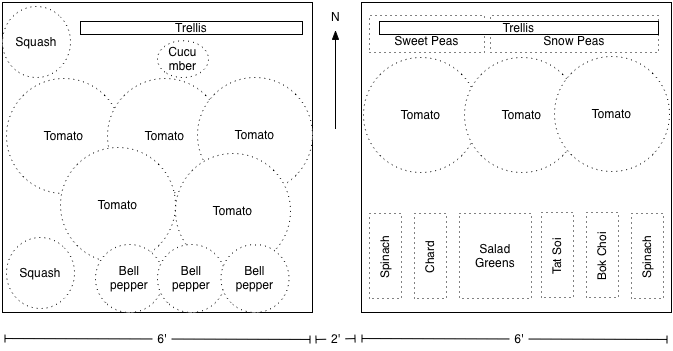
Sam took 1 by 12s to build the sides of the raised beds, and reinforced the sides with 2x4s. Each bed is 6’x6′, giving us 72 square feet of garden, or a measly 0.002 acres. We also found leftover flagstones on our property left by the former owners. We used them to line the path between the beds. It’s a start.

The left bed is partially planted. You can see the different seed beds and the pea trellis we put up. The right bed is taking longer to shape up because it’s mostly going to be full of transplanted tomatoes.

2014-05-21 15.11.59

Layout


Here’s the current garden plan. We’ve planted the greens and peas, and one of the squashes. Since I’m not setup to start seeds indoors, I’ll be buying transplants for my tomatoes, peppers and cucumbers. More pictures when everything goes in and the big deer fence goes up.


Leave a comment

Relocavore Guest Post: Shakshouka, or eggs cooked in tomato

By Sal Cania

Israeli culture is a fascinating intermixing of many traditions and their foods, in large part due to their geography, but more importantly because of the history the modern state that resides in the hotly contested region has. Early settlers hailed mostly from Eastern Europe, bringing with them many of the local foods they had incorporated into their culture after their several millennia long Diaspora. But, as is common in many settler colonial societies of the era, they fervently adopted local fare. Hummus? Palestinian. Couscous? Lebanese. Shakshouka? Tunisian. Many of these dishes are known in the United States now by their Israeli versions, and that is in no small part because of the Jewish Diaspora that has roots in many regions around the country.

135023_660790703249_2081111753_oOne dish in particular, Shakshouka, roughly translated from Arabic as a “mixture”, is a delicious composition of tomatoes, peppers, onions, cumin, and the star of the show: poached eggs. It’s currently a staple dish in many North African diets, as well as sharing traits with similar cuisine in Mexico, Turkey, and Spain. This is not surprising, since the meal is nutritious, inexpensive, and simple.

I first discovered this little gem when I traveled to Tel Aviv and Jerusalem in 2012 as part of a scouting trip for the business school I worked at. Our goal was to sample aspects of Israeli culture, food, and learn about the business climate and major industries present in their economy. As you can imagine, food and drink took center stage pretty quickly, largely because the trip organizer had planned a number of fantastic dining experiences to draw us in. Sitting in a board room at an Intel processor factory was somewhat less interesting.

Shakshouka, mainly served for breakfast on trip, was the one plate I went for each day. Alongside pita for dipping and the traditional smoked/pickled fish that Israelis love to eat for breakfast, I was easily full until 2pm. Lunch, after a morning plate of Shakshouka, was not even important. We ate it anyway, because they served plenty of other amazing treats, and kept the [Israeli] wine flowing all day long.


Fast forward to May of 2014, when my wife found this great recipe for the dish, I realized that I had actually forgotten about my Shakshouka experience. Looking to try new things to complement our usual Vermont summer evening meals, we went for it. To start out, we followed this recipe to a “T”, and it came out very well, if a bit dry, but I suspect that was because we left it on for the full simmer time. This is a meal, after having now cooked it, that I can see being extremely versatile and offering opportunities to change out ingredients without adversely changing the overall concept. See: huevos rancheros.

In this age of post-colonialism, a dish that successfully made its way around the Middle East has somewhat ironically come now to Vermont, not at the tip of a sword, but rather the internet. It’s a fitting example of the change we’ve seen over the last century, but also a reminder that some things stay the same. Plus, who wouldn’t like spicy poached eggs in tomato sauce? My fellow Italians, take note.