ReLocavore: Redefining "local"

Back to Wisconsin, my cheesehead friends


4 Comments

Bees in my compost pile

bees_in_compost

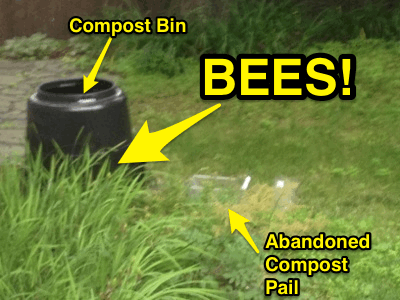
This photo is blurry because I won’t get any closer to the compost bin, nor stand around at a distance long enough to be noticed.

I got good and stung by some bees earlier this week. Turns out a hive of bees has taken up residence in my compost pile and are going to use all of their stingers to defend their new home and queen.

OW!

I would like to regain use of my compost pile – especially because I pulled weeds in the garden and yard this weekend and would like to put that material into the compost to get it rotting. Plus, we only have a 1 gallon compost pail in the house and it’s full to overflowing. But, if I’m going to put things into my compost pile I need to get rid of these bees!

Sidebar: Sam and I debated whether these are bees or wasps. I believe they are bees for three reasons. They’re small, they don’t have a narrow waist between the head and thorax, and when I was stung (twice, I’ll have you know) the stingers and the venom sacks were embedded in my skin. Sam is unconvinced and believes these are wasps. He supposedly has photographic evidence. I will leave it up to him to prove me wrong. However, if we catch a bee, I may post a photograph of it to have y’all weigh in. Back to the discussion…

Having bees living in my compost pile is leaving me with quite the dilemma. Do I kill the bees or try to save and relocate them? Some squishy liberal in me doesn’t want to kill much of anything, especially honeybees. Honeybees are vital for pollination and maintaining local food production. They’re valuable industrious workers spreading around pollen and turning flowers into ripe, swollen ovum, which we call fruits and vegetables. I would feel like a murderer to take poison to their hive. In addition, killing off the bees means  using poison, which is rather antithetical to producing organic compost. I have been working for a few months to make that compost and I would really like to use it in my garden, thankyouverymuch.

Those were the arguments for gently nudging the bees toward seeking other habitation elsewhere. These are the arguments for killing the *BEEP*ers.

OW! Sam and I have BOTH gotten stung in the past week. I was stung twice while running around my yard and waving my arms like an idiot. (Eddie Izzard had something to say about this…) And there are PLENTY of other places where the bees can live. My compost pile is NOT the most habitable environment. It’s rotting, for one. So my arguments for total annihilation are: 1. pain. 2. better real estate.

So… What do I do? I’m sure the internet has many suggestions to offer on how to poison the bees to kill them and make them go away. Yes, that would make my support-the-death-penalty alter ego rather happy, but I would like to continue to have fruits and vegetables fertilized by my own organic compost. What a dilemma. Any other options?
1 Comment

This Week in Veg: We don’t eat all of these vegetables

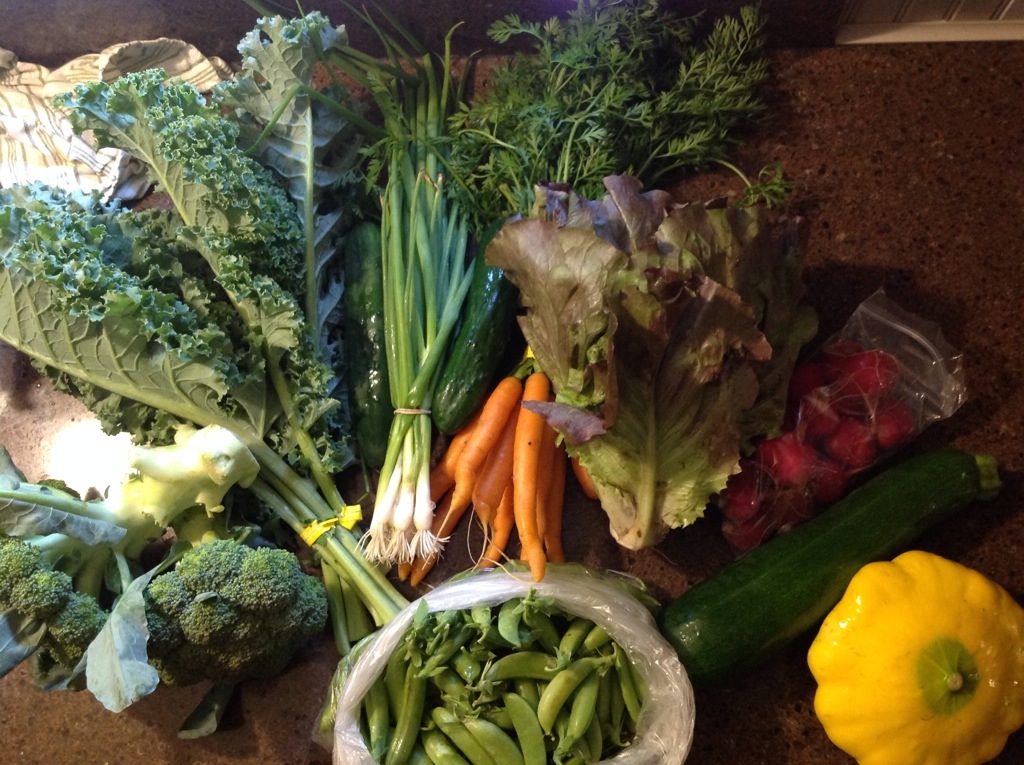
20140709-094250-34970703.jpg When talking with my non-– CSA friends about joining a CSA, one of the first concerns that comes up is, “how do you eat all of those vegetables?”

My answer? We don’t.

Sure, we do eat a good portion of these vegetables, or else we wouldn’t have joined the CSA. But, honestly, there’s a lot of things that still will turn bad in the bottom of our refrigerator. Arugula and red lettuce are common culprits. We don’t sweat it, we have a compost pile. The food isn’t “going to waste”, we’re making fertilizer for next year’s garden.

But only about 5% of our CSA box will go bad. That’s because I often anticipate foods that we might not eat, and I’ll either find a special recipe to use with that vegetable, like I did with the pesto and arugula. Alternatively, some of the foods we put away to eat in the winter. This week, we received a large head of broccoli. Broccoli is really easy to blanch and freeze, and we eat it all throughout the winter in different dishes like stirfry and garbage rice. I know that the value of that broccoli will be greater to me in November or March then it will be this week. So, into the freezer it goes.

Last, I know there’s some vegetables that we just don’t eat in our house. Eggplant is probably the best example. What I will do is leave the eggplant at the CSA pickup point. There’s often someone else there picking up their vegetables who might enjoy an eggplant which would otherwise just rot in my refrigerator. I also occasionally give away CSA vegetables to my friends and neighbors when we are really overwhelmed with too many vegetables.

So, when you look at these pictures and you think “how do you eat all of that?” We don’t. We have figured out how to cheat the CSA system so that we don’t have to eat all of those vegetables. But importantly we don’t let the vegetables go to waste.


Leave a comment

The new garden

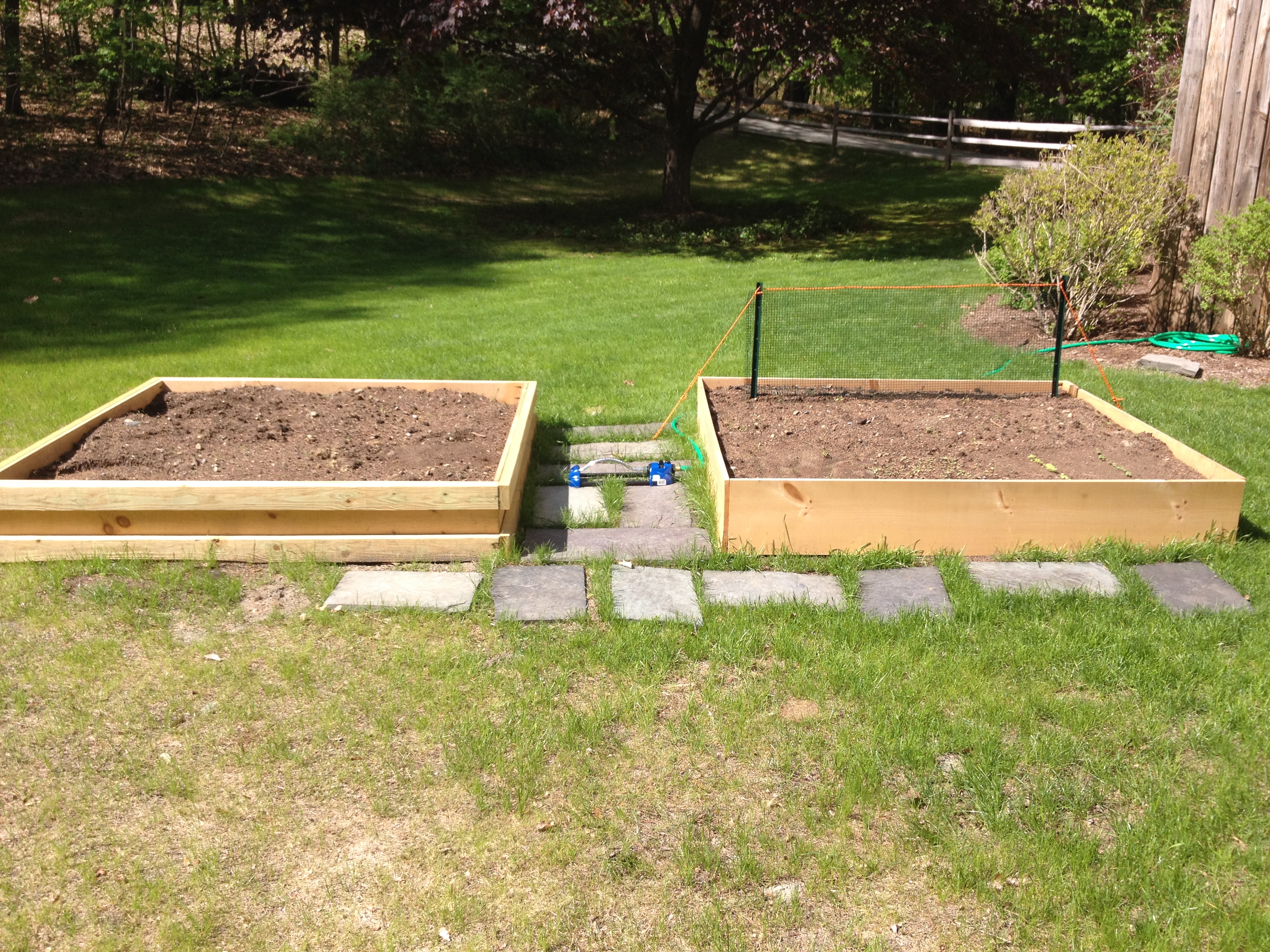
Sam and I have been dreaming about having a garden again. Finally, we dug up some sod, had a pile of topsoil delivered, and built some raised beds.

Sam took 1 by 12s to build the sides of the raised beds, and reinforced the sides with 2x4s. Each bed is 6’x6′, giving us 72 square feet of garden, or a measly 0.002 acres. We also found leftover flagstones on our property left by the former owners. We used them to line the path between the beds. It’s a start.

The left bed is partially planted. You can see the different seed beds and the pea trellis we put up. The right bed is taking longer to shape up because it’s mostly going to be full of transplanted tomatoes.

2014-05-21 15.11.59

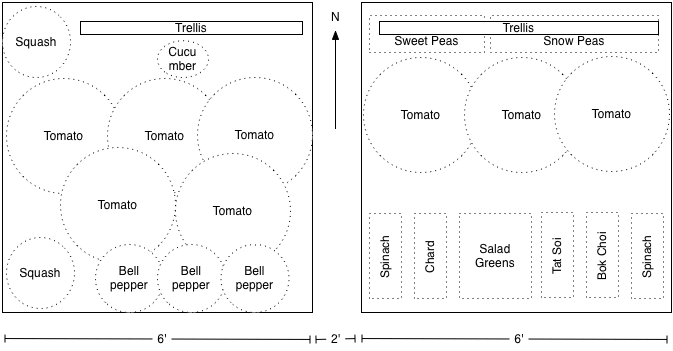
Layout


Here’s the current garden plan. We’ve planted the greens and peas, and one of the squashes. Since I’m not setup to start seeds indoors, I’ll be buying transplants for my tomatoes, peppers and cucumbers. More pictures when everything goes in and the big deer fence goes up.


Leave a comment

Welcome back to Relocavore!

Welcome back to Relocavore! After this past Winter hiatus, I’m eager to update y’all on the fun that we’ve had since this past fall.

New URL… Relocavore.com

Over the next 48 hours the DNS servers will refresh and typing relocavore.com into your web browser will bring you right to the blog. Also in a few weeks,I’ll be rolling out a weekly email digest. Sign up and you’ll get an email on Saturday morning with a summary of the previous week’s posts. In another bit of outreach, I’ll be posting short synopses to the Upper Valley Locavore mailing list. (localvore-localag-discussion@lists.valley.net)

Relocavore goes Hyper-Local

Relocavore House

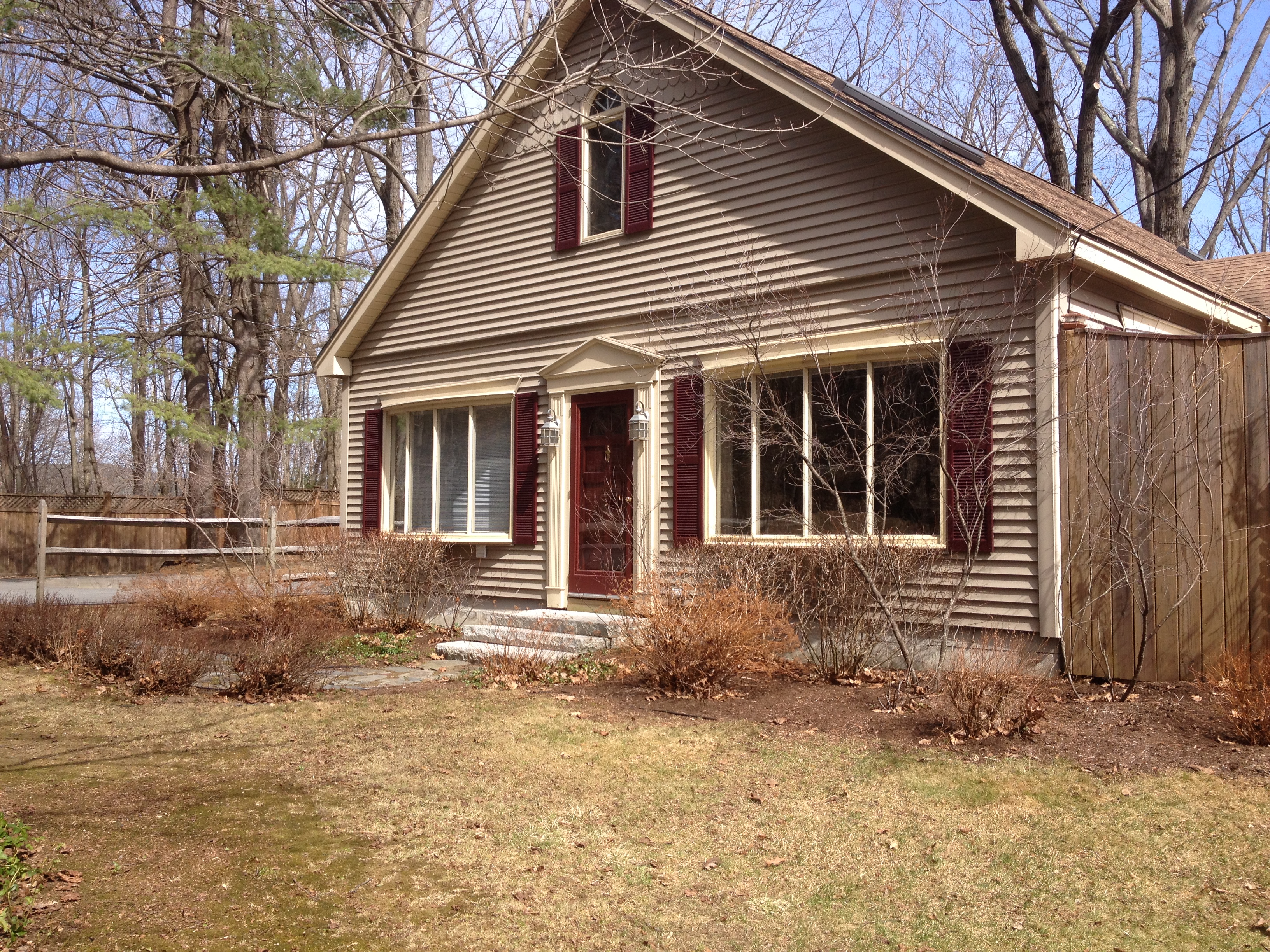
I always think of the most local eating is the food you grow, forage or hunt yourself. It’s great supporting local ag, but it’s also great to work for your food too. In that vein, the Relocavore family relocated this past December to 1.3 acres in West Lebanon, New Hampshire. There’s a house and garage and plenty of room for garden plots. The hubby and I put in two 6 ‘ x 6 ‘ raised beds, with plans for expansion to 6 beds in the next three years. I’ll talk much more about garden planting in the near future. Those posts will be separately categorized as “gardening” if you want to focus or filter.

Relocavore Guest Bloggers

I’m reaching out to other foodies, locavores, and bloggers to contribute content to Relocavore. You’ll see some guests posts coming out from foreign travelers, home gardeners, cheese makers, and home brewers.

Kanning Klatch

This summer, I will be joined by other members of the Relocavore Kanning Klatch in putting food by for the season. This means more informative canning posts under the heading of CanningU. I’ll introduce the Kanning Klatch members later in the season.

New Videos

I’m focusing more on video production and sharing with the hope of assembling a few cooking videos. If you’re interested in helping with video production reach out and we’ll make it happen. Stay tuned.

This is going to be a great year for local eating. We’re anticipating a robust harvest, warm weather, and lots of new farms, vegetables and adventure!